The fideicomiso explained: how a foreigner owns property on the Mexican coast
Published July 14, 2026 · text last revised September 11, 2026
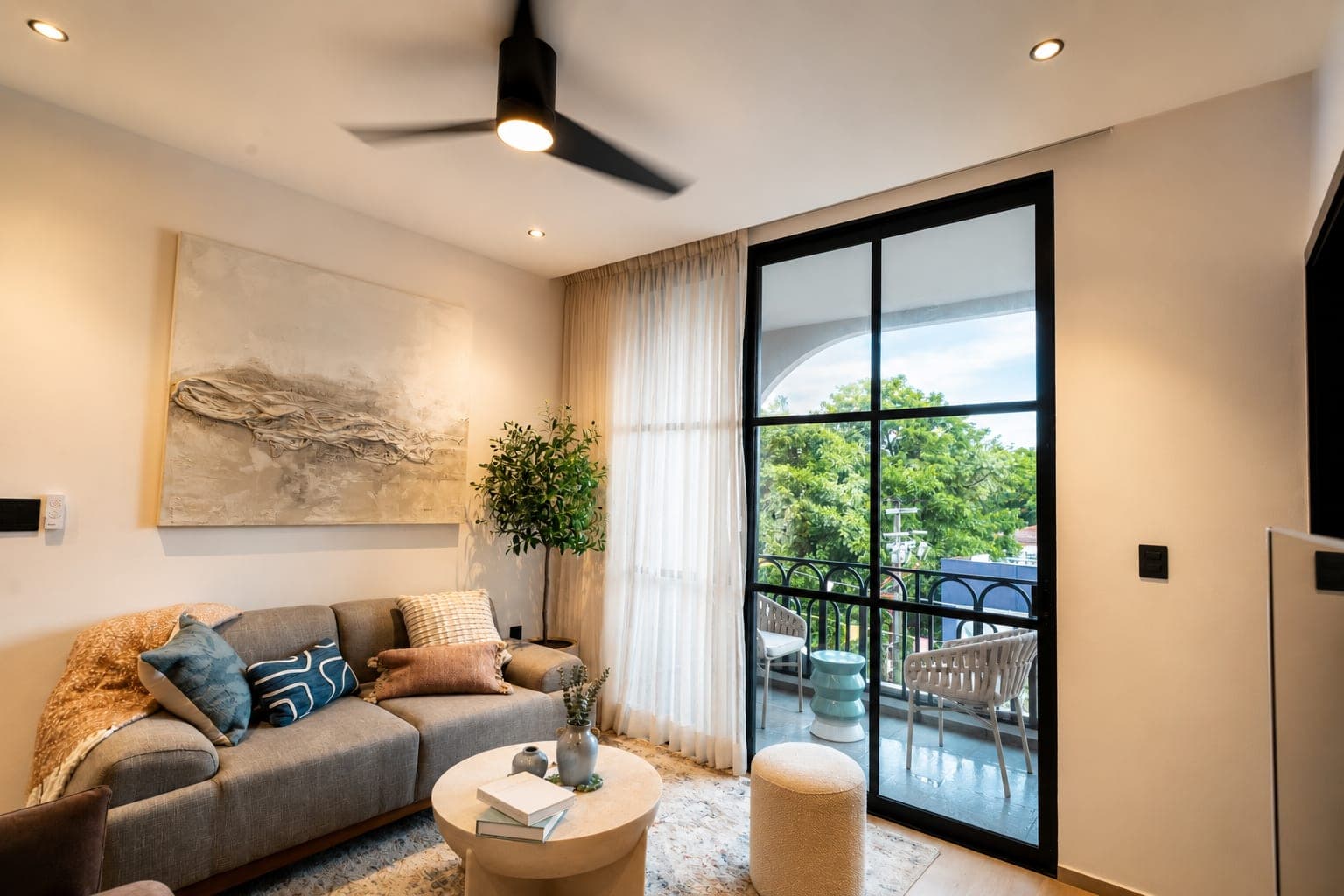
If you are looking at a residence at Marbella, on Avenida 25 Norte in Playa del Carmen, the same question comes up sooner or later: can a foreigner actually own here? The short answer is yes. The long answer is called a fideicomiso, and it is worth understanding before you sign anything. This guide covers what it is, why it applies specifically along the coast, who really owns the property, what it costs to keep each year, and how it works when you sell or leave it to your heirs. Treat this as orientation; the exact figures and paperwork always come from your notary and the trustee bank.
What it is and why it applies on the coast
The Mexican Constitution draws a band it calls the restricted zone: 50 kilometers in from any coastline and 100 kilometers from any border. Playa del Carmen sits well inside that band, so any property near the water, including a residence on Avenida 25 Norte, falls under the rule. Article 27 is explicit: inside that strip, foreigners may not acquire direct ownership of land or water under any circumstances. That is why a foreigner cannot hold direct title there in their own name the way they would in Texas or Alberta.
50 km The strip inland from the beaches where no foreigner may hold direct ownership of land (Mexican Constitution, art. 27, section I).
The fideicomiso is the route the law created for exactly this. It is a trust agreement with an authorized Mexican bank acting as trustee: the bank holds title to the property, and you enter the agreement as the beneficiary. It is not a lease or a long-term rental. You own the rights to the property, with the power to live in it, remodel it, rent it out, pass it on, and sell it whenever you choose.
The authorized trustees are established Mexican banks: BBVA, for example, offers a dedicated restricted-zone trust as of September 2026, and it is not the only bank that provides the service. Its product page makes clear the trust is for foreign individuals and for housing only, meaning houses or apartments that are already built. The process starts with a permit from Mexico's Ministry of Foreign Affairs (SRE) and then goes through the notary, who formalizes the whole transaction.
Who actually owns it
This is where buyers get confused, so let's be blunt. The bank holds the title, but only in safekeeping. It cannot sell the property, cannot rent it out on its own, cannot mortgage it or touch it without your instruction. The bank is a custodian of the paperwork, not the owner.
As the trust beneficiary, you hold every right that matters in practice: you live in the property, you remodel it, you decide whether to rent it out, you collect that rent, and you pick the day you sell. Article 12 of the Foreign Investment Law puts it in writing: using the property includes its proceeds and any income from operating it, whether through third parties or through the bank itself. If the property sells, the money is yours, not the bank's. When a developer hands over a unit, you are the one who moves in.
So the accurate way to put it is that the bank holds title in trust while you are the economic owner and the one who uses it. The distinction matters because it defines what you can do with your home. In practice that means you can live in it, rent it out, or sell it whenever you decide.
If the bank fails, or you want to switch
What happens to your condo if the trustee bank goes under? Mexico's Credit Institutions Law answers that. The bank has to keep separate books for every trust it holds, and the law says those assets are "in no case" liable for anything beyond the trust's own obligations or what the law lets third parties claim against them (art. 79). Put simply, the bank's own debts are not paid with your home.
If a trustee bank resigns or is removed, the law requires another trust institution to be appointed in its place (General Law of Negotiable Instruments and Credit Operations, art. 385). For an actual bank failure, Homia.mx's May 2026 guide describes the same outcome: the trust moves to another institution and you do not lose the property.
You can also switch banks on your own, say to get a lower annual fee or better service. That counts as a modification of the trust, so it is signed before a notary and recorded. BuyPlaya's November 2025 guide puts the bank's administrative fees for these changes at USD 300 to 700.
What about a Mexican company?
The law allows it, but for a different purpose. A Mexican company whose bylaws admit foreign shareholders can take title in its own name inside the restricted zone only if the property is used for non-residential activities, and it has to notify the SRE within 60 business days of the purchase (Foreign Investment Law, art. 10, section I). That notice carries a fee of MXN 1,473.64 in 2026 (Federal Fees Law, art. 25, section X).
For housing, the same law sends that company down the trust route: section II of article 10 says its rights over residential property in the restricted zone fall under the chapter on fideicomisos. If what you want is a home to live in or spend the season in, setting up a company does not get you out of the trust. It adds paperwork on top. If you have a business in mind, that conversation belongs with your lawyer and your accountant.
The SRE permit, in 2026 numbers
You don't file the permit yourself. The bank does, through its trust officers, and only electronically: in the SRE's SIPAC27 system or, while that system has technical problems, by email to the SRE itself. Among other details, the application lists the name and nationality of the buyer and of any substitute beneficiaries, how the property will be used, its location, measurements and boundaries, and its distance from the federal coastal zone.
MXN 21,648.83 The SRE's 2026 fee for the trust permit, plus MXN 596.29 to review the application (Federal Fees Law, art. 25).
The SRE's fees are set by the Federal Fees Law. For 2026 they come to MXN 21,648.83 for the permit and MXN 596.29 to review the application (art. 25, sections V and III). If the permit needs to be amended later, that fee is MXN 9,740.31. The amounts are updated through Mexico's annual tax resolution, the Resolución Miscelánea Fiscal (the 2026 figures were published in the Official Gazette on December 28, 2025), so the number that applies is the one for the year you sign. The permit is only one piece of the closing costs.
How long does it take? The Foreign Investment Law gives the SRE five business days to rule on an application filed with its central office, and if it doesn't answer in that time, the application counts as approved (art. 14). The SRE's own page for this procedure, last updated in October 2020, notes that the five-day term has been suspended under an order published in the Official Gazette on September 29, 2020. Your bank will give you the real timeline once it files.
The paperwork the bank asks for
Every bank has its own checklist, and it pays to ask for it early. For reference, the list BBVA publishes for its restricted-zone trust (a 2020 version) asks the foreign buyer for a valid, legible passport, a document showing your immigration status in Mexico, and proof of address from your home country no more than three months old, such as a power, gas or phone bill. It also asks for your social security number and your tax ID number from your home country, which the list marks as indispensable, your Mexican RFC and CURP if you already have them, and the bank's administrative data form.
If you name substitute beneficiaries at the outset, they bring their own paperwork: ID (a passport, for foreigners), RFC and CURP or their home-country social security and tax ID numbers, and recent proof of address. If someone signs for you under a power of attorney, the list asks for one granted before a Mexican notary or, if it was signed abroad, one that is apostilled or legalized and translated by a certified translator. The list ends with the property documents, including the deed recorded with the Public Registry, the certificate of no liens, and the latest property tax receipt. The full sequence of the purchase is in the guide to buying as a foreigner.
Term and what it costs each year
The fideicomiso is set up for 50 years and is renewable, in practice indefinitely. As it nears expiration you request an extension for another 50 years, and that is a renewal, not a new purchase. It is meant to be renewed as many times as needed, and the rights can pass to your heirs within the same agreement.
One thing to watch: the law grants the extension at the request of the interested party (Foreign Investment Law, art. 13), which means it does not renew by itself. Asking late has its own fee, MXN 10,613.78 in 2026 (Federal Fees Law, art. 25, section V, item c).
There are two kinds of cost worth separating. The setup cost, paid once at the start, covers three things: the SRE permit, the notary fees, and the bank's opening commission, which Homia.mx puts at USD 500 to 1,000 (Fideicomiso Cost in Mexico, Complete Guide 2026, May 2026). The total depends on the notary, the bank, and the property value, so the number that counts is the quote for your specific case. The annual fee is what the bank charges to administer the trust each year: USD 500 to 1,000, a range that spans Homia.mx's 500 to 700 and MyCasa.mx's 550 to 1,000 (2025 guide, January 2025).
These figures vary by bank, by property value, and by exchange rate, so treat them as a reference, not a quote. Figures as of September 2026, for informational purposes; this is not legal, tax, or investment advice, and no return is guaranteed. The exact amounts come from the trustee bank and your notary for your specific case; the official permit fees are the Federal Fees Law amounts listed above.
How it passes to heirs and how you sell
Inheritance is one of the reasons the fideicomiso is convenient. Inside the agreement you name substitute beneficiaries, meaning who receives the rights when you pass away. BBVA, for one, lets you name them at any time. When that happens, the transfer is handled directly within the trust, without opening probate in Mexico. It is cleaner than leaving a property held under direct title, which is why many families find it reassuring.
To sell, you instruct the bank and the transaction closes before a notary, like any purchase and sale. If the buyer is also a foreigner, they usually step into the same trust or set up a new one in their name. If the buyer is Mexican, the property can leave the trust and move to direct title. Either way, the sale price is yours.
None of this replaces professional advice. Before signing, sit down with a notary and, if your tax life is in the United States or Canada, with an advisor who understands both sides. The HH Luxury Real Estate team walks Marbella buyers through that part of the process and makes the introductions to the notary and the trustee bank.
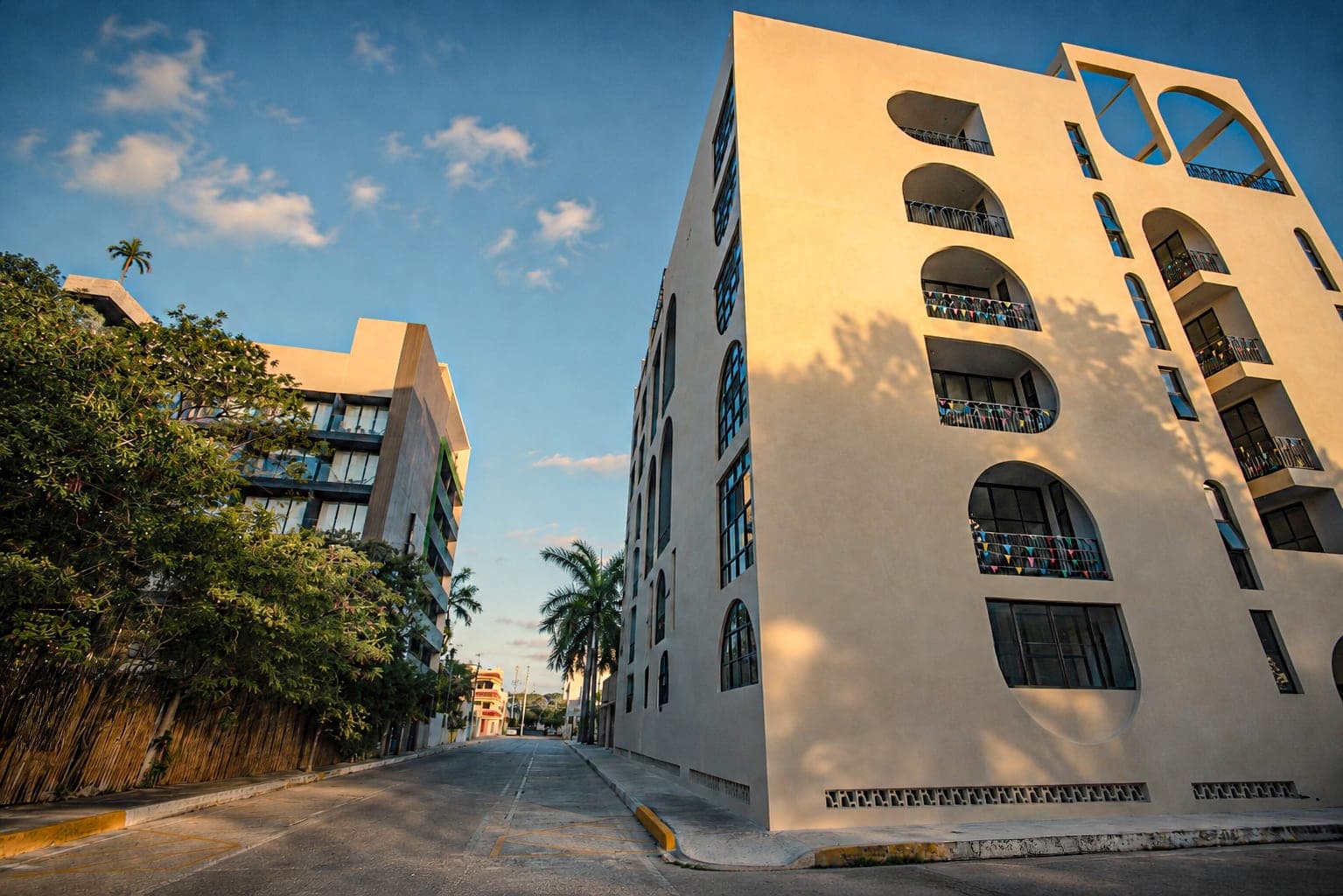
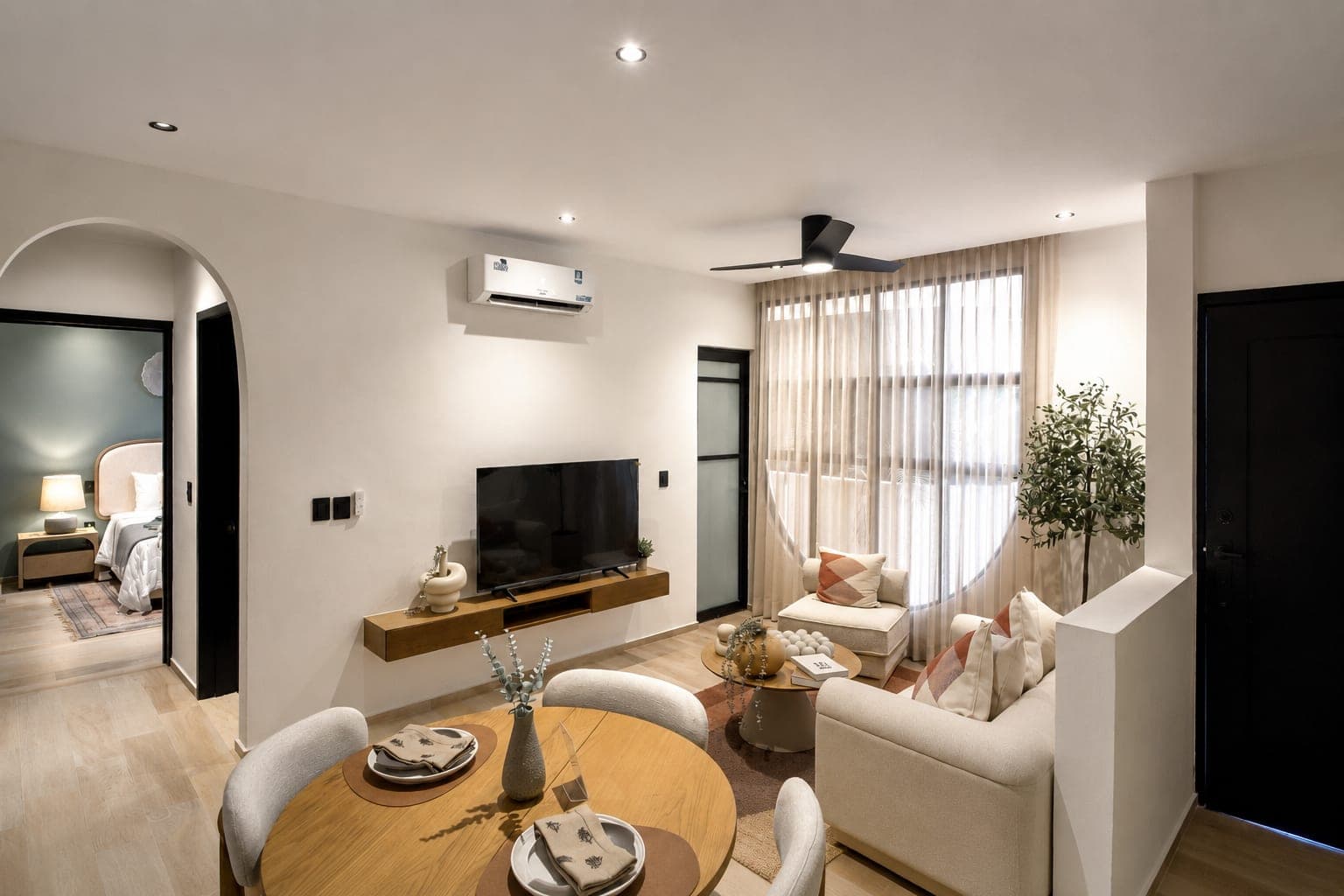
Marbella is a 35-residence tower by Grupo VYT on Avenida 25 Norte at Calle 24 Norte, in Playa del Carmen, with homes ranging from the Bígaro (one bedroom, one bath) to the Edúlis (the two-bedroom, double-height penthouse of 182.94 m²). The pricing and availability page lists the current price for every unit, and you can book a tour over WhatsApp, any day of the week.

Sources: Homia.mx: Fideicomiso Cost in Mexico, Complete Guide 2026 (Felix Garcia, May 1, 2026; accessed September 2026) · MyCasa.mx: Fideicomiso Trusts, what you need to know in 2025 (January 22, 2025, updated January 27, 2025; accessed September 2026) · Secretaría de Relaciones Exteriores (SRE), "Costos y Tiempos" portal, Art. 27 of the Constitution (accessed July 2026) · SRE: Permiso para constituir un fideicomiso en zona restringida, procedure page (last updated October 2, 2020; accessed September 2026) · BBVA México: restricted-zone fideicomiso product page (accessed September 2026) · BBVA México: Listado de documentos, Fideicomiso Zona Restringida (PDF checklist, 2020; accessed September 2026) · Constitución Política de los Estados Unidos Mexicanos (Mexican Constitution), art. 27, section I (current text, last amended in the DOF on June 2, 2026; Chamber of Deputies) · Ley de Inversión Extranjera (Foreign Investment Law), arts. 10 to 14 (current text, last amended in the DOF on May 27, 2024; Chamber of Deputies) · Ley Federal de Derechos (Federal Fees Law), art. 25 (2026 amounts updated by the Resolución Miscelánea Fiscal, DOF December 28, 2025; Chamber of Deputies) · Ley de Instituciones de Crédito (Credit Institutions Law), art. 79 (current text, last amended in the DOF on November 14, 2025; Chamber of Deputies) · Ley General de Títulos y Operaciones de Crédito (General Law of Negotiable Instruments and Credit Operations), art. 385 (current text, last amended in the DOF on March 26, 2024; Chamber of Deputies) · BuyPlaya: How Fideicomisos Work: Renewals, Modifications & Costs (Aarón Vega, November 11, 2025; accessed September 2026)