Closing costs when buying in Playa del Carmen: what you pay beyond the price
Published July 14, 2026 · text last revised September 11, 2026
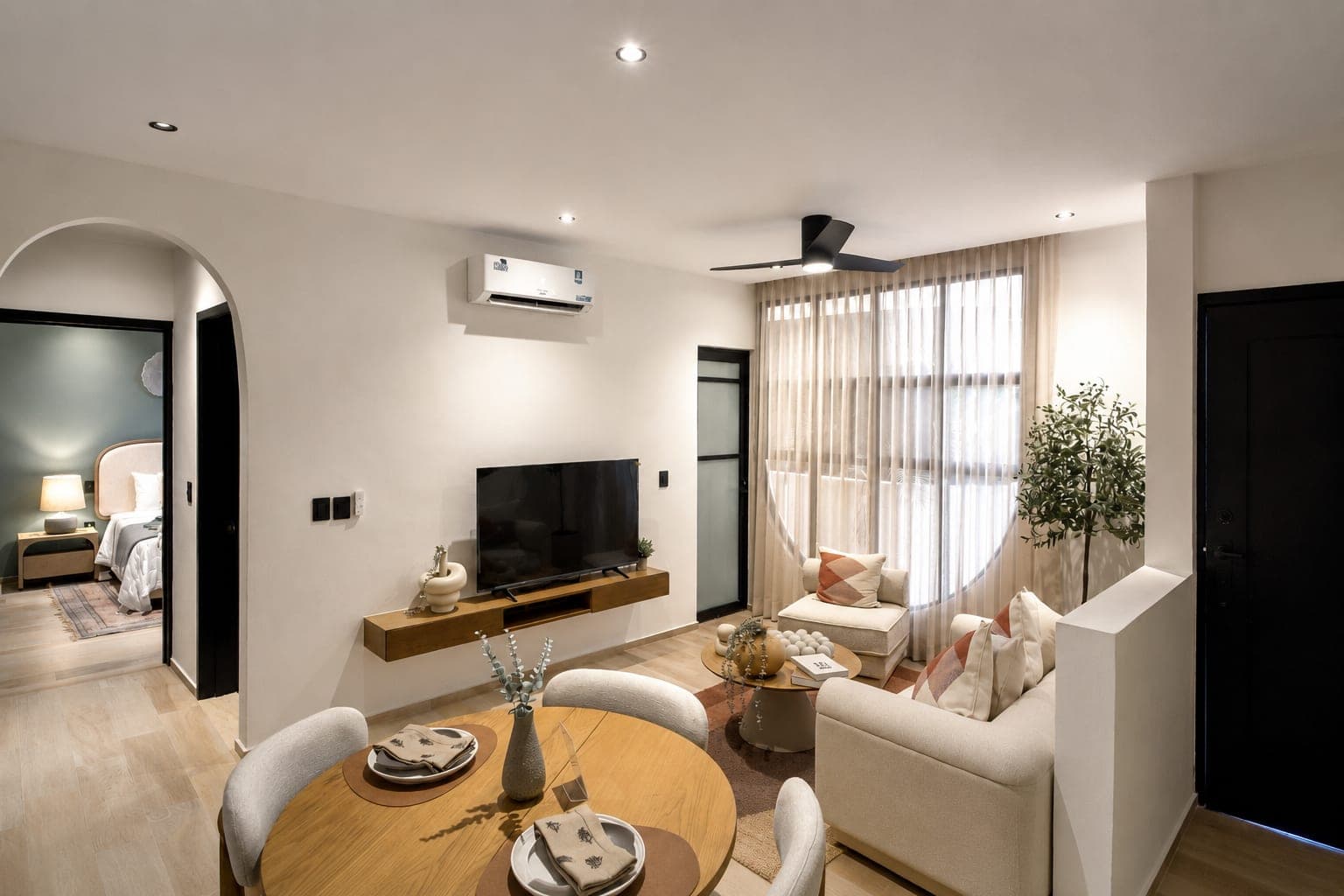
When you buy a residence in Playa del Carmen, like the homes at Marbella on Avenida 25 Norte at Calle 24 Norte, the list price is only part of what you actually pay on closing day. On top of that price come taxes, professional fees and registration fees that together make up the closing costs. For a foreign buyer there is one extra step: the bank trust, or fideicomiso, the legal path to owning property along the coast. This guide walks through each item, with the percentages currently used in Playa del Carmen and a round-number example to show the scale. Treat these as reference figures: they shift depending on the notary, the value the authority assigns, and the trustee bank. Figures from July to September 2026. The final number for your purchase will come from the notary public.
What gets added to the purchase price
Closing costs are a set of payments that happen around the signing of the deed. In Playa del Carmen the main ones are: the ISABI, the tax on acquiring the property; the notary's fees; the registration fees at the Public Property Registry; the appraisal; and, for foreign buyers, setting up the fideicomiso plus its annual fee.
As a reference, NAS Playa estimates the total at around 5% to 8% of the property value for a foreigner buying in the restricted zone, that is, through a fideicomiso (2025 guide). In the example further down, the total comes to 6.6% to 9.0%. TheLatinvestor warns that giving a single closing-cost percentage is misleading. The real percentage depends on the amount, on which notary handles it, and on the value the authority uses as the base, so ask for a written breakdown before signing anything.
Who pays what: buyer or seller
Quintana Roo law starts from an even split: the state Civil Code says buyer and seller pay the deed and registration costs half and half, unless the contract says otherwise (Art. 2555). Market guides describe a different custom, where the buyer covers almost all of the closing and the seller pays the real estate commission plus income tax on their gain (Caribe Luxury Homes, April 30, 2026; NAS Playa, 2025 guide). What decides it is your contract, so make sure every line item is assigned there in writing.
One item has an owner by law. The ISABI is owed by whoever acquires the property, because that is how the municipal tax law defines the taxpayer (Ley de Hacienda del Municipio de Playa del Carmen, Art. 23 Ter). Another is worth checking even though it is not yours to pay: if the seller leaves property tax (predial) unpaid, the debt stays with the property, since the same law makes the buyer liable for it (Art. 9). That is why, when the notary files the ISABI return, it has to include a receipt showing the predial is paid up (Art. 23 Septies).
ISABI: the largest item, and it went up in December 2025
The ISABI (property acquisition tax) is almost always the biggest single line on a closing statement. In Playa del Carmen, whose municipality was renamed from Solidaridad to Playa del Carmen in March 2025, the rate rose to 4% effective December 10, 2025, after Decree 167 was published; before that it was 3% (Ley de Hacienda del Municipio de Playa del Carmen, Art. 23 Quinquies; Housebuy.mx, accessed Jul 14, 2026).
4% ISABI rate in Playa del Carmen since December 10, 2025. It was 3% before.
One detail catches many buyers off guard: the 4% is not always calculated on the price you paid. The municipal tax law uses the highest of four values as the base: the agreed price, the cadastral appraisal, an appraisal by a state-registered valuer, and the last value the seller declared (Art. 23 Quáter). That is why the figure can come out a little higher than expected. The notary calculates it, records it in the deed and pays it to the municipal treasury within 15 days of signing (Arts. 23 Sexies and 23 Septies).
Notary, registry, appraisal and the fideicomiso
Notary fees in Playa del Carmen run about 1% to 2% of the value, plus 16% VAT on their services. Public Registry registration fees usually land around 0.5% to 1%. The appraisal, done by an authorized valuer, tends to cost between USD 300 and 500 and includes items such as the no-lien certificate (NAS Playa, 2025 guide, accessed Jul 14, 2026).
If you are buying as a foreigner along the coastal strip, you also need a fideicomiso, a bank trust: a Mexican bank holds title in trust for you, with full rights to use, rent, sell and bequeath. For the trust, the bank charges an opening fee of USD 500 to 1,000 (Homia.mx, May 2026) and an annual fee of USD 500 to 1,000; that second range spans the 500 to 700 Homia.mx publishes and MyCasa.mx's 550 to 1,000 (January 2025). On top of that, the SRE charges MXN 21,648.83 for the permit in 2026, plus MXN 596.29 to review the application (Federal Fees Law, Art. 25). The bank's amounts vary by institution and by year, so it is worth asking the bank for current figures before reserving.
A round-number example
Take a purchase price of $4,000,000 MXN, a round figure chosen only to show the order of magnitude. With ISABI at 4% (assuming the price is the highest base), the tax comes to roughly $160,000 MXN. Add notary fees, VAT and registration fees, and the percentage-based portion lands, approximately, between $226,000 and $293,000 MXN, roughly 5.7% to 7.3% of the price.
On top of that come the appraisal (about USD 300 to 500) and the fideicomiso: the bank's opening fee (USD 500 to 1,000), its annual fee, and the SRE permit (MXN 21,648.83 plus MXN 596.29 for the application review, in 2026). With everything together, at 18.5 pesos to the dollar, this example comes to 6.6% to 8.6% of the price, or 6.8% to 9.0% if you add the trust's first annual fee. All of these figures are estimates and they vary: the exact number depends on the base value the authority sets, on the notary, and on the exchange rate that day. Figures as of September 2026, for informational purposes; this is not tax or legal advice. For a number tailored to your purchase, ask the notary and a tax advisor.
At Marbella, the 35-residence Mediterranean tower on Avenida 25 Norte, the current price of every home is published on the pricing and availability page, from the Bígaro (one bedroom, one bath) to the Edúlis penthouse. Run the same math on any of them. Tours are by appointment via WhatsApp, any day of the week.
Closing day: bank transfer, not cash
Above a certain amount, a property in Mexico cannot be paid for in cash. The anti-money-laundering law bans it once the deal is worth 8,025 times the daily UMA or more, and the ban applies to both sides, whoever pays and whoever accepts (LFPIORPI, Art. 32, section I). The UMA is the peso reference Mexican laws use to set amounts. For 2026 it is $117.31 MXN a day, in force since February 1 (INEGI), which puts the cap at $941,412.75 MXN. Every residence at Marbella is priced above that.
$941,412.75 MXN The 2026 cap for paying for a property in cash: 8,025 times the daily UMA of $117.31 (LFPIORPI, Art. 32; INEGI).
So the money moves through banks. When a deal reaches that same threshold, the notary must identify in the deed how it was paid (Art. 33). If you want a third party to hold the funds until signing, you can hire an escrow service, which NAS Playa quotes at USD 500 to 1,000 in its 2025 guide.
What you pay every year after closing
Closing costs are paid once. After that, three payments come back every year: property tax (predial) to the city, the fideicomiso's annual fee to the bank if you bought as a foreigner, and the condominium maintenance fee. The developer provides that last one in writing, along with the house rules. Ask for it before you reserve.
For a condo, predial is calculated on the value of your own unit, using the highest of the cadastral value, the bank appraisal, the declared value and the rent the property could produce (Ley de Hacienda del Municipio de Playa del Carmen, Arts. 12 and 13). You can pay it every two months in advance or for the whole year at once, and paying early gets you a discount: in 2026 the city took 25% off full-year payments made January 1 to 15, 15% from January 16 to 31, and 10% in February (Municipality of Playa del Carmen, January 2, 2026).
Two details for the year you buy. Since a December 2025 amendment, the treasury collects the difference even on a prepaid year if the tax base changes with the transfer-of-title filing (Art. 16). And with a fideicomiso, the law makes the trustee bank the taxpayer and you, as the person using the property, jointly liable (Art. 8).
The price on the deed follows you until you sell
If someone suggests putting a lower price on the deed to pay less ISABI, the math does not work. The tax is calculated on the highest of the price, the appraisals and the last declared value, so a lower price does not necessarily lower the base. And if the tax authority runs an appraisal that comes in more than 10% above the agreed price, the whole difference counts as your income as the buyer and is taxed: a 20% provisional payment if you are a Mexican tax resident, 25% if you live abroad (Ley del ISR, Arts. 125, 132 and 160). Mexico's Supreme Court upheld that rule in amparo en revisión 384/2025 (IDC, March 6, 2026).
The other effect shows up when you sell. What you paid to buy comes off your gain: the acquisition cost, notary fees, the taxes and duties on the deed, the appraisal and commissions (Ley del ISR, Art. 121). If the deed shows less than you paid, you pay tax on a bigger gain later. If you live outside Mexico when you sell, the default is 25% of the full sale price with no deductions. When the sale is recorded in a public deed, you can choose instead to pay on the gain, with those same deductions, at the top individual rate (Art. 160), which Caribe Luxury Homes puts at 35%. This is general guidance, not tax advice; your notary or accountant runs the numbers for your case.
The law refers to proven cost, so keep the deed and the notary's invoices, and get a receipt for every payment at closing.
Sources: Housebuy.mx, "¿Qué es el ISABI en Playa del Carmen y por qué subió?" (accessed Jul 14, 2026). ISABI at 4% since Dec 10, 2025 (Decree 167); base = highest of price, cadastral value and appraisal. · NAS Playa, "Closing Costs in Mexico: What Buyers Really Pay (2025 Guide)" (accessed Jul 14, 2026 and again Sep 11, 2026). Notary fees 1-2%, registry 0.5-1%, appraisal USD 300-500; escrow USD 500-1,000; the seller pays commission and tax on the gain; estimates total closing costs for a foreigner in the restricted zone at 5% to 8%. · Municipality of Playa del Carmen, ISABI portal at playadelcarmen.gob.mx (accessed Jul 14, 2026). The municipal authority that sets and collects the ISABI; the municipality has been officially named Playa del Carmen since March 19, 2025 (formerly Solidaridad). · TheLatinvestor: How to buy property in Playa del Carmen as a foreigner (page updated September 8, 2026). Says a single closing-cost percentage is misleading, and puts the SRE permit at about MXN 21,650; the bank's fees are separate. · Congress of the State of Quintana Roo, "Ley de Hacienda del Municipio de Playa del Carmen, del Estado de Quintana Roo" (municipal tax law), last amended in the State Official Gazette on Dec 10, 2025 (accessed Sep 11, 2026). ISABI: Arts. 23 Ter (owed by the acquirer), 23 Quáter (base: highest of agreed price, cadastral appraisal, registered valuer's appraisal and the seller's last declared value), 23 Quinquies (4% rate), 23 Sexies (payment within 15 days) and 23 Septies (the notary calculates, records and pays it; predial receipt required). Predial: Arts. 8 (the trustee is the taxpayer; the person using the property is jointly liable), 9 (buyer liability), 12 and 13 (base per condo unit) and 16 (bimonthly payment; differences collected after the transfer of title). · Congress of the State of Quintana Roo, "Código Civil para el Estado de Quintana Roo", last amended in the State Official Gazette on May 31, 2023 (accessed Sep 11, 2026). Art. 2555: deed and registration costs are split half and half unless agreed otherwise. · Mexican Chamber of Deputies, "Ley Federal para la Prevención e Identificación de Operaciones con Recursos de Procedencia Ilícita" (federal anti-money-laundering law), last amended DOF Jul 16, 2025 (accessed Sep 11, 2026). Art. 32, section I: cash may not be paid or accepted for property worth 8,025 UMA or more; Art. 33: the notary identifies the payment method in the deed. · KPMG Mexico, "Flash | Inegi | Valor de la UMA para 2026" (January 2026, accessed Sep 11, 2026). INEGI published on Jan 8, 2026 a daily UMA of $117.31 MXN, in force since Feb 1, 2026; 8,025 x $117.31 = $941,412.75. · Mexican Chamber of Deputies, "Ley del Impuesto sobre la Renta" (income tax law), last amended DOF Apr 1, 2024 (accessed Sep 11, 2026). Arts. 121 (deductions on sale: acquisition cost, notary fees, taxes and duties, appraisal, commissions), 125 and 130 (appraisal more than 10% above price: the difference is the buyer's income), 132 (20% provisional payment) and 160 (non-residents: 25% of the total, or the option to pay on the gain when the sale is in a public deed; 25% on an appraisal difference). · IDC Online, "SCJN valida pago de ISR si compras un inmueble subvaluado" (Mar 6, 2026, accessed Sep 11, 2026). Mexican Supreme Court, amparo en revisión 384/2025: upholds Arts. 125, 130 section IV and 132 of the income tax law. · Municipality of Playa del Carmen, "Gobierno de Estefanía Mercado arranca 2026 con 25% de descuento en el pago del predial en Playa del Carmen" (Jan 2, 2026, accessed Sep 11, 2026). Early full-year predial payment for 2026: 25% off from January 1 to 15, 15% from January 16 to 31, and 10% in February. · Caribe Luxury Homes, "Who Pays Closing Costs in Mexico? Buyer vs. Seller Breakdown", Mark Kilpatrick (Apr 30, 2026, accessed Sep 11, 2026). The buyer covers almost all closing costs; the seller pays the commission and income tax on the gain, which for non-residents can reach 35% of the gain. · Homia.mx, Fideicomiso Cost in Mexico, Complete Guide 2026, Felix Garcia (May 1, 2026, accessed Sep 11, 2026). Bank opening fee of USD 500 to 1,000 and annual fee of USD 500 to 700; the SRE permit is separate. · MyCasa.mx, Fideicomiso Trusts, what you need to know in 2025 (Jan 22, 2025, updated Jan 27, 2025; accessed Sep 11, 2026). Annual trust fee of USD 550 to 1,000. · Mexican Chamber of Deputies, Ley Federal de Derechos (Federal Fees Law), Art. 25, sections III and V, amounts updated for 2026 by the Resolución Miscelánea Fiscal, DOF Dec 28, 2025 (accessed Sep 11, 2026). SRE trust permit: MXN 21,648.83; application review: MXN 596.29.