
Buying in Playa del Carmen as a foreigner: how it actually works
Published July 14, 2026 · text last revised September 11, 2026
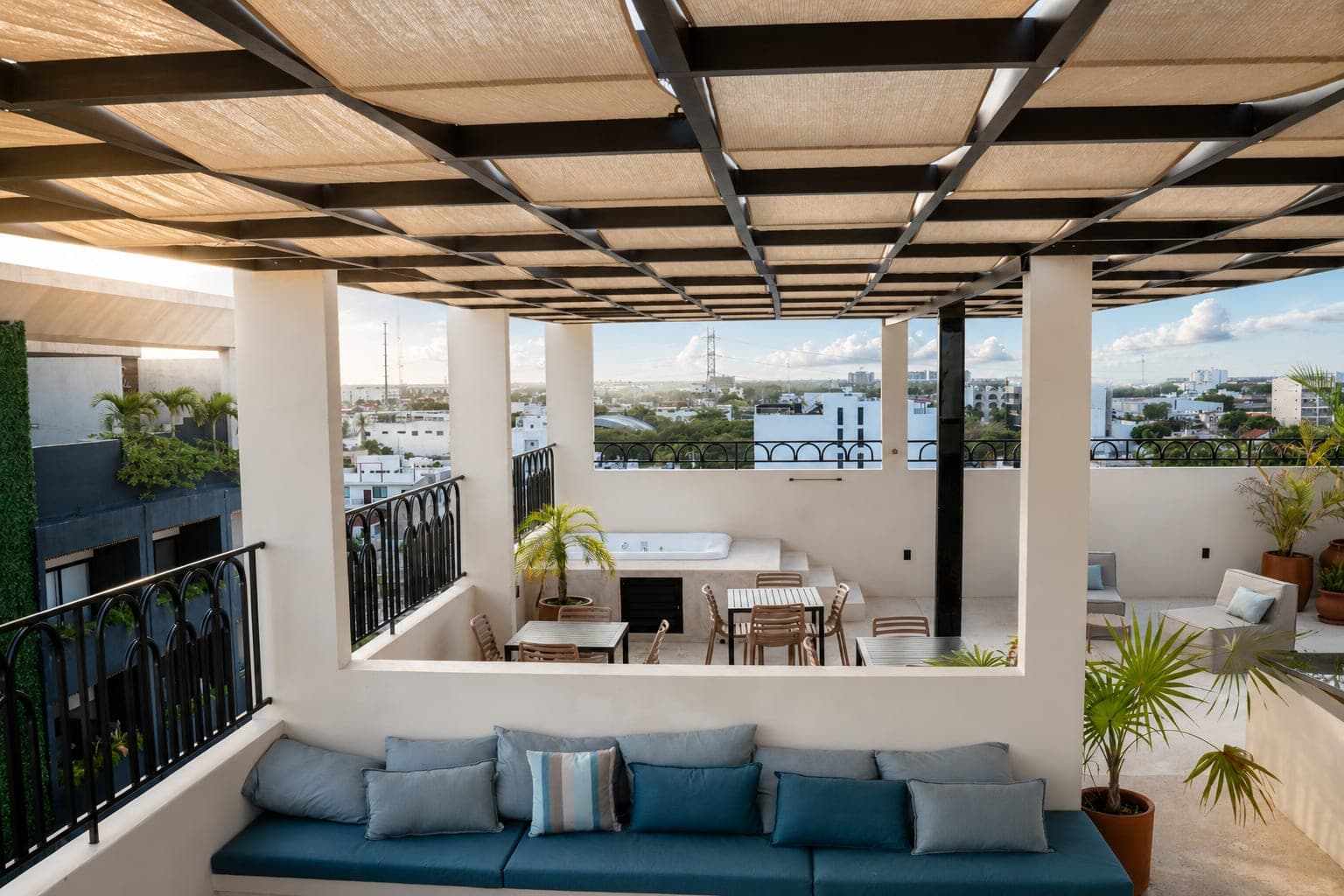
If you're from the U.S. or Canada, the first question is almost always the same: can I legally own property here? The short answer is yes. Foreigners have been buying on the Mexican coast for decades, and the path is well worn. Playa del Carmen sits inside what Mexico's Constitution calls the "restricted zone," so a foreign buyer doesn't take direct title in their own name; ownership runs through a bank trust called a fideicomiso. It sounds technical. In practice it's paperwork that notaries and banks here handle every day. This guide walks through the full process, with rough timelines and costs, so you arrive at the closing table knowing what to expect. Take it as general guidance, not legal or tax advice; figures change and every deal is different, so confirm the numbers with your own notary and advisor.
Can I buy? Yes, through a fideicomiso
The Mexican Constitution defines a "restricted zone": the strip within 50 kilometers of any coastline and 100 kilometers of any border. Playa del Carmen falls inside that coastal band, so as a foreigner you can't hold direct title in your own name to residential property there. The legal route is the fideicomiso: an authorized Mexican bank holds legal title as trustee, and you are the beneficiary; your notary or advisor can tell you which banks offer the service today.
The bank's name on the title unsettles some buyers at first, but in practice the bank doesn't run your property. As beneficiary you hold every right that matters: live there, renovate, rent it out, sell whenever you like, pass it to your heirs. The bank only administers the trust; it can't sell or touch the property without your instruction. The trust is granted for 50 years and renews indefinitely, and you can name your heirs inside the trust itself, which usually spares them a probate case in Mexico (Sources: Mexico Relocation Guide, 2025; TheLatinvestor, 2026).
One reassuring detail: you don't need Mexican residency, and you don't have to be in the country for the whole process. Plenty of deals close by power of attorney and wire transfer.
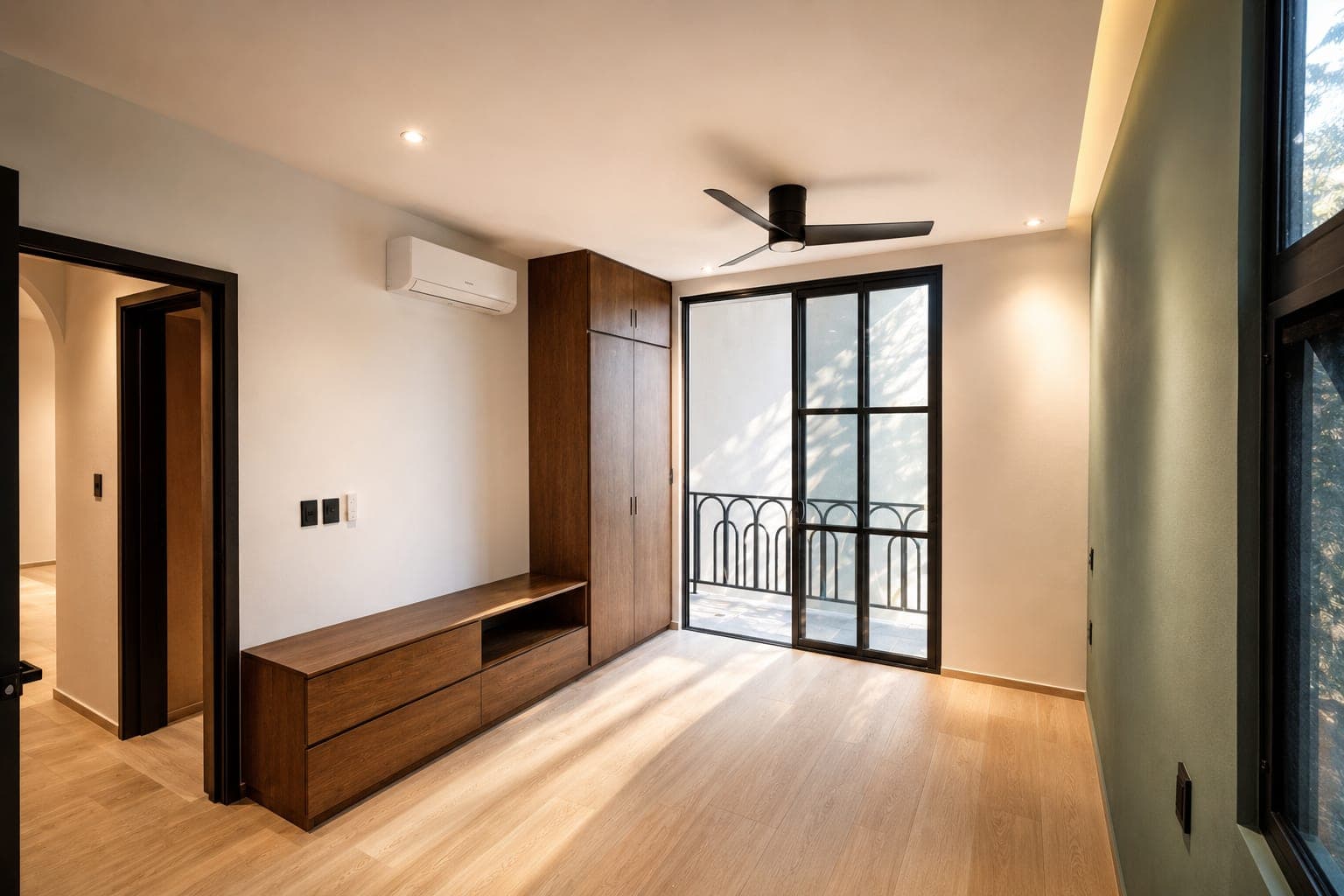
The steps, in order
It starts with an offer and a deposit. Once the price and terms work for you, you sign a promissory or preliminary purchase agreement and put down a deposit to reserve the unit and take it off the market. That document locks in the price, the timeline and the conditions, and it kicks off due diligence: confirming the title is clean and free of liens, and that taxes and utilities are current.
In parallel, the permit from Mexico's Ministry of Foreign Affairs (SRE) gets filed. It authorizes the bank to take the property as trustee with you, a foreigner, as beneficiary (Foreign Investment Law, art. 11), and your chosen bank drafts the trust agreement. With that in hand, everything comes together at the notary's office. In Mexico the notary public is a state-appointed official who verifies the legality of the transaction, calculates and withholds taxes, and records the deed (escritura) with the Public Registry. The notary is impartial by design and doesn't represent you specifically, which is why many buyers bring their own real estate attorney to watch their side of the table.
Closing happens on deed day: you wire the balance and pay closing costs before signing in front of the notary. Then come the practical loose ends that make the home actually yours: switching the utilities into your name (CFE for electricity, water), updating the property-tax (predial) record with the municipality and, where it applies, registering for the condo's maintenance dues.
Documents, approximate costs and timing
The paperwork the bank and notary ask for is straightforward: a valid passport, proof of address, a birth certificate and, in some cases, references or information for anti-money-laundering compliance (KYC). Nothing exotic, but it pays to have it ready and to know whether anything in English needs translation or an apostille.
On the numbers, budget on the high side. Total closing costs cover the acquisition tax, notary fees, registration fees and the setup of the fideicomiso. NAS Playa puts them at 5% to 8% of the value for a foreigner buying in the restricted zone (2025 guide), and the example in the closing costs guide comes to 6.6% to 9.0%. For the trust, the bank charges an opening fee of 500 to 1,000 USD (Homia.mx, May 2026) and an annual fee of 500 to 1,000 USD; that second range spans the 500 to 700 Homia.mx publishes and MyCasa.mx's 550 to 1,000 (January 2025). The SRE permit is separate: in 2026 it costs MXN 21,648.83, plus MXN 596.29 to review the application (Federal Fees Law, art. 25). What the bank and the notary charge varies by institution and by the value of the property. Figures as of September 2026, for informational purposes only; not investment advice and no guarantee of returns; confirm the exact amounts with your notary before signing.
On timing, plan for six to twelve weeks from accepted offer to signed and registered deed (Source: TheLatinvestor, 2026), depending on how fast the SRE permit comes through and how organized the seller's paperwork is. Purchases paid in full, with no financing, tend toward the short end; files with heavier documentation toward the long end.
About the SRE permit: the law gives the ministry five business days to rule on it when the application is filed with its central office (Foreign Investment Law, art. 14). Don't count on that deadline. The ministry's own page for the procedure says it suspended the deadline because of problems with its SIPAC27 system and that applications are being processed by hand, taking longer than usual. That page was last updated October 2, 2020, and was still up on September 11, 2026.
How you pay: wire, loans and the cash cap
A purchase like this gets paid through the bank, and that part isn't optional. Mexico's anti-money-laundering law bans paying cash, in pesos or dollars, for real estate worth 8,025 times the daily UMA (the reference unit Mexican law uses to set legal amounts) or more, even if the cash goes through a bank (Federal Law for the Prevention and Identification of Operations with Resources of Illicit Origin, art. 32, section I). With the 2026 UMA at 117.31 pesos, the cap is $941,412.75 MXN (INEGI, January 2026). The ban cuts both ways: the seller can't accept that payment either.
$941,412.75 MXN At or above that value, the law bars paying for real estate in cash in 2026. It equals 8,025 times the daily UMA (anti-money-laundering law, art. 32).
A Mexican mortgage is possible, but it comes with conditions. Coldwell Banker La Costa, a Puerto Vallarta brokerage, explains in its financing guide that the bank route is for foreigners with permanent residency: it asks for the residency card, a current RFC tax number, statements from a Mexican bank and from your bank back home, and credit reports from a U.S. bureau and from Mexico's Buró de Crédito. Without residency, you're looking at a private lender at higher rates. The same firm estimates that only about 5% of real estate deals in and around Puerto Vallarta involve any direct mortgage financing.
Marbella offers another route with no bank loan: 30% down, and the developer finances the remaining 70% over 12, 18, 24 or 36 months, interest free. The reservation deposit is $100,000 MXN, refundable, and it counts toward the down payment. Every unit on the pricing and availability page shows its monthly payment for each term, and the developer confirms final terms in writing before you reserve.
Does buying get you residency?
Not automatically. If you enter as a tourist, Mexico's Migration Law lets you stay up to 180 consecutive days from your entry date, without permission to work (art. 52, section I). That's close to six months, and owning a condo here doesn't extend it.
To stay longer you need a resident visa, which you apply for at a Mexican consulate. Temporary residency lasts up to four years (art. 52, section VII), and owning real estate in Mexico is one way to qualify. The bar is high: the Mexican consulate in Milan, checked on September 11, 2026, asks for a public deed to property worth more than $10,758,500.10 MXN. If you're thinking about that route, ask your consulate which document it accepts when the property is held in a fideicomiso.
People mix this up a lot: residency doesn't change how you buy. The restricted-zone rule applies to foreigners, whether they're tourists or residents. The Foreign Investment Law (art. 11) sets up the trust for foreign individuals and companies and makes no distinction by residency, so in Playa del Carmen the route is still the fideicomiso, residency card or not.
Taxes if you rent or sell
When you sell, income tax (ISR) follows your tax residency, not your passport. If you're not a Mexican tax resident, the general rule is 25% of the total sale price, with nothing deducted (Income Tax Law, art. 160). When the sale is signed as a public deed, the law lets you pay on the gain instead of the price, at the top individual rate of 35% (International Tax Review, October 24, 2023). In that case the notary calculates the tax, records it in the deed and pays it to the tax authority.
25% Of the total sale price, with no deductions: the general ISR rule when you sell without Mexican tax residency (art. 160).
There's an exemption for selling your own home. The part of the price up to 700,000 UDIS (Mexico's inflation-indexed investment units) is free of ISR and the excess is taxed proportionally, as long as the sale is formalized before a notary and you haven't sold another home under the same exemption in the previous three years (art. 93, section XIX, subsection a). A foreigner can use it by declaring Mexican tax residency to the notary and proving it with a tax residency certificate or a tax ID card, plus an RFC or CURP and a Mexican tax address other than the property being sold (IDC, November 24, 2025).
If you rent the condo out without Mexican tax residency, the general rule is 25% of what you collect, with no deductions, withheld by whoever pays you. If the person paying you is a foreign resident, you file and pay it yourself within 15 days (art. 158). When the rent is collected through the fideicomiso, the trustee bank issues the invoice and does the withholding. These are general rules, so have an accountant review your case before you sign.
What to expect and who to lean on
It's a process the notaries and banks across the Riviera Maya run all year long, and the cast is small: the trustee bank, the notary and, if you want one, your own attorney. What matters is having people at the table who answer to you, not to the seller. The notary certifies the transaction and safeguards its legality, but stays impartial; your attorney and your real estate advisor are the ones reading the fine print with your interests in mind.
Before you sign any deposit agreement, take your time on three things: that the title is clean and debt-free, that the SRE permit is in process, and that you understand the full breakdown of closing costs, not just the list price. If a number doesn't add up, get the explanation in writing.
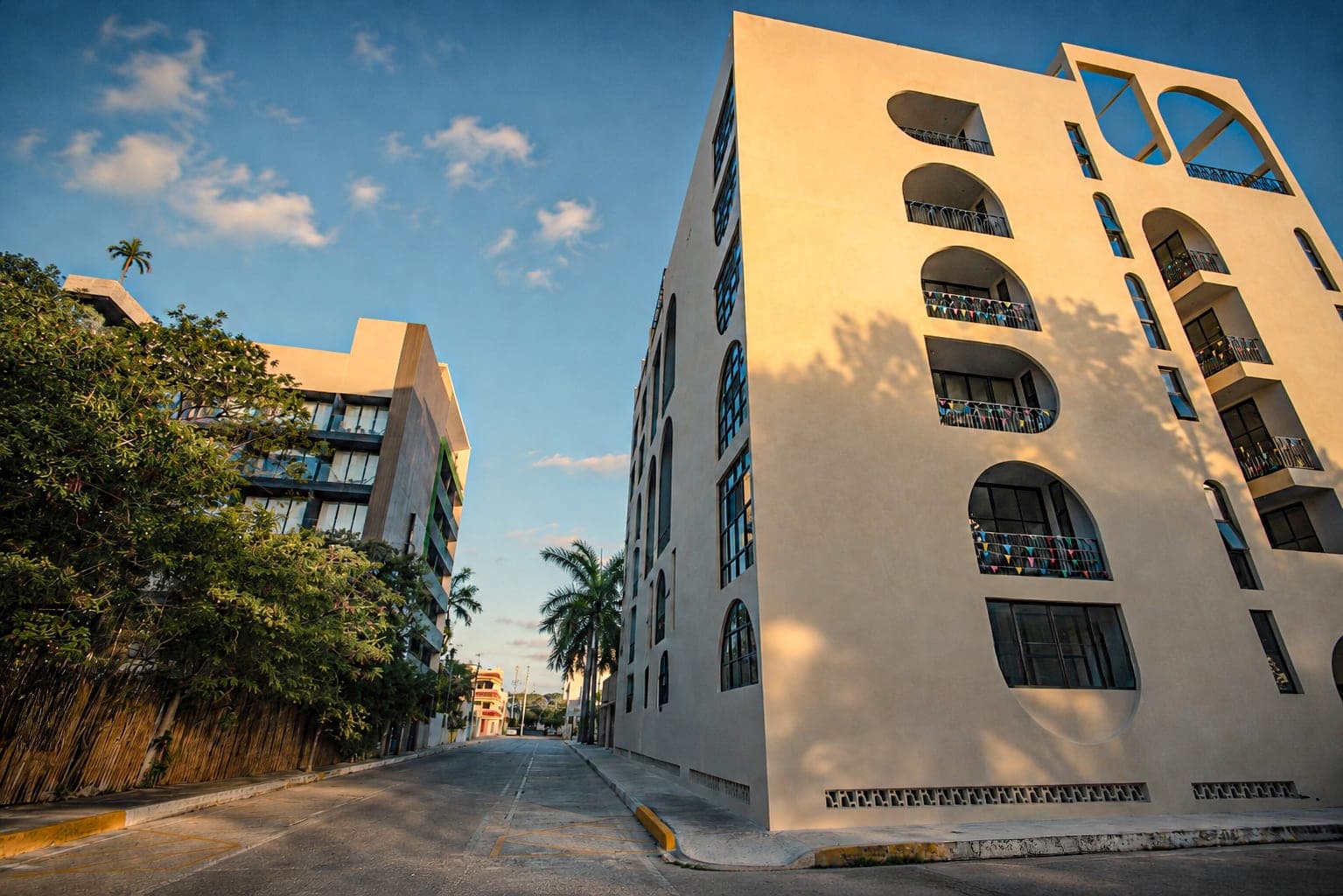
At Marbella, the tower of 35 Mediterranean residences on Avenida 25 Norte, in Playa del Carmen's Colonia Hollywood (Gonzalo Guerrero), we walk that path with buyers from the first visit onward. The residences run from the one-bedroom, one-bath Bígaro to the Edúlis penthouse (two bedrooms, double-height ceilings), along with the two-bedroom, two-bath Múrex and the Strómbus double-height loft (one bedroom, 1.5 baths); current pricing for every unit is published on the pricing and availability page. The tower is finished, with immediate delivery, and tours are by appointment via WhatsApp, any day of the week. For the final word on anything legal or tax-related: your notary and your advisor.
Sources: Mexico Relocation Guide: Can Foreigners Own Property in Mexico? (2025) · TheLatinvestor: How to buy property in Playa del Carmen as a foreigner / Property Foreign Ownership Playa del Carmen (2026) · MyCasa.mx: Fideicomiso Trusts, what you need to know (2025) · Ley de Inversión Extranjera (Foreign Investment Law), arts. 11 and 14, last amended DOF 27-05-2024 (Chamber of Deputies, accessed Sep 11, 2026). The SRE permit lets the bank take title as trustee for foreign beneficiaries; five-business-day legal deadline to rule on it. · Secretaría de Relaciones Exteriores: Permiso para constituir un fideicomiso en zona restringida (page last updated Oct 2, 2020, accessed Sep 11, 2026). Five-business-day deadline suspended because of SIPAC27 system problems. · Ley Federal para la Prevención e Identificación de Operaciones con Recursos de Procedencia Ilícita (anti-money-laundering law), art. 32, section I, last amended DOF 16-07-2025 (Chamber of Deputies, accessed Sep 11, 2026). Cash payment banned for real estate worth 8,025 times the UMA or more. · KPMG México: Flash Inegi, valor de la UMA para 2026 (January 2026). Daily UMA of MXN 117.31 from February 1, 2026. · Coldwell Banker La Costa: Financing & Mortgages in Mexico (accessed Sep 11, 2026). Bank mortgage requirements for permanent residents; about 5% of purchases around Puerto Vallarta use direct mortgage financing. · Ley de Migración (Migration Law), art. 52, sections I and VII, last amended DOF 15-01-2026 (Chamber of Deputies, accessed Sep 11, 2026). Visitor stays of up to 180 days; temporary residency of up to four years. · Consulado de México en Milán (SRE): Visa de Residencia Temporal por adquisición de Bienes Inmuebles en territorio mexicano (accessed Sep 11, 2026). Property worth more than MXN 10,758,500.10, shown by public deed. · Ley del Impuesto sobre la Renta (Income Tax Law), arts. 93 section XIX(a), 158 and 160, last amended DOF 01-04-2024 (Chamber of Deputies, accessed Sep 11, 2026). · International Tax Review: Foreign resident capital gains taxation in Mexico: a practical guide, by Juan José Paullada Eguirao and David Guakil Raffoul, Ritch Mueller (Oct 24, 2023). 35% rate on the net gain under the optional regime. · IDC Online: Residencia fiscal en México: en venta de casa por extranjeros, by Francisco Brito (Nov 24, 2025). Requirements for a foreigner to claim the home-sale exemption (rule 3.11.3, 2025 Miscellaneous Tax Resolution). · Homia.mx: Fideicomiso Cost in Mexico, Complete Guide 2026 (Felix Garcia, May 1, 2026; accessed Sep 11, 2026). Bank opening fee of USD 500 to 1,000 and annual fee of USD 500 to 700; the SRE permit is separate. · Ley Federal de Derechos (Federal Fees Law), art. 25, sections III and V, amounts updated for 2026 by the Resolución Miscelánea Fiscal, DOF 28-12-2025 (Chamber of Deputies, accessed Sep 11, 2026). Trust permit: MXN 21,648.83; application review: MXN 596.29. · NAS Playa, "Closing Costs in Mexico: What Buyers Really Pay (2025 Guide)" (accessed Sep 11, 2026). Estimates total closing costs for a foreigner in the restricted zone at 5% to 8%.