
Playa del Carmen or Tulum: how to weigh the two before you buy
Published July 14, 2026 · text last revised September 11, 2026
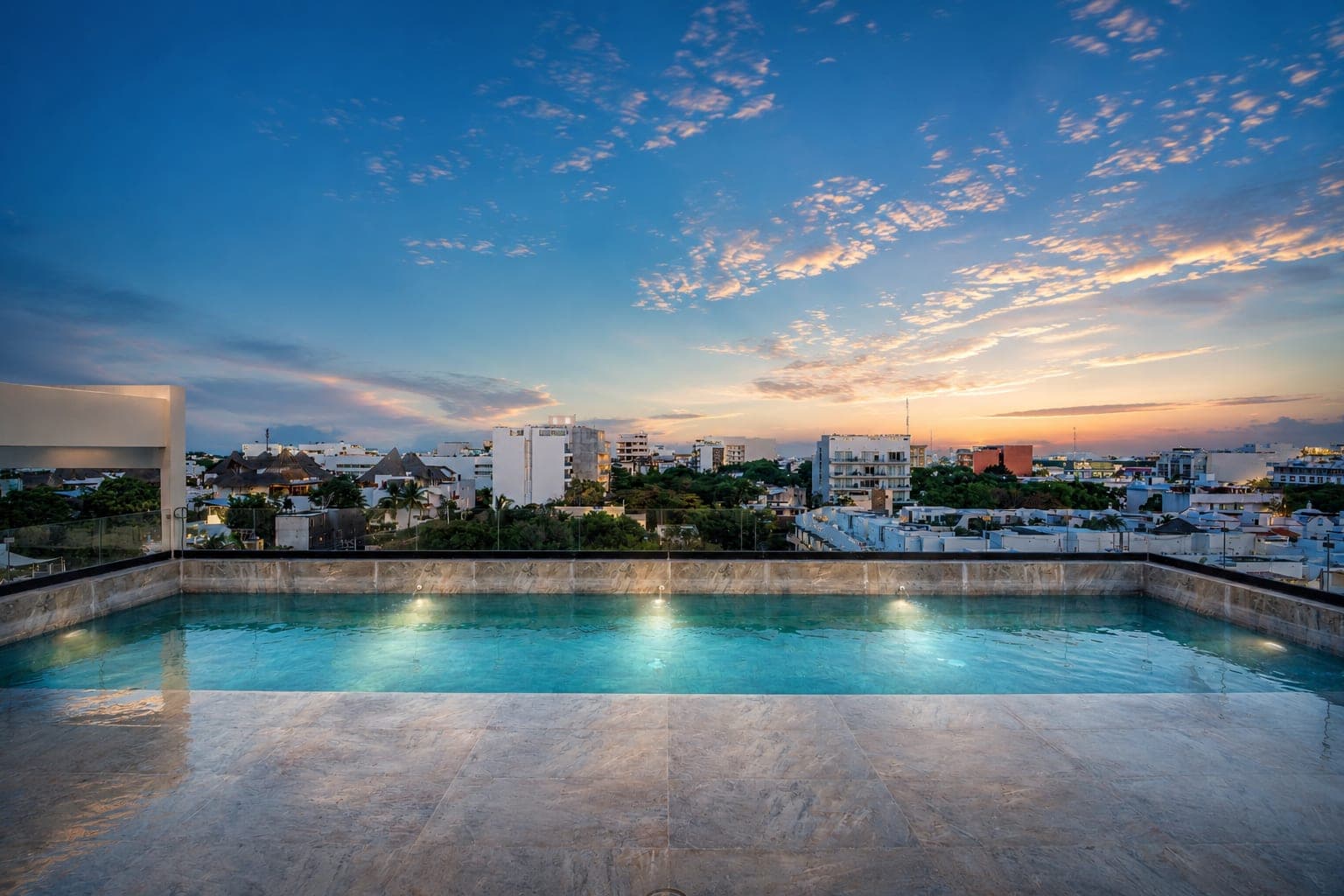
If you're looking at the Riviera Maya from the U.S. or Canada, sooner or later you'll compare Playa del Carmen with Tulum. They're neighbors on the same stretch of coast, but they work very differently in almost everything that matters when you're buying: how you get there, what daily life feels like, how settled each market is, and at what price. This guide lays the differences out with verifiable, dated figures so you can decide which one fits the way you'd actually use the place. Where there are numbers, we cite the source; where something moves fast or we couldn't confirm it, we say so instead of making it up.
Getting there and getting around: the hours add up
The most concrete difference starts at the airport. From Cancún, the region's busiest airport, it's about 55 km to Playa del Carmen (source: transfercancun-airport.com, 2025), roughly 45 minutes to an hour by car; from that same airport to Tulum it's closer to two hours (source: everythingplayadelcarmen.com, 2025-2026). You pay that extra hour on every flight and every time guests come down.
Tulum does have its own airport now, Felipe Carrillo Puerto (TQO), open since late 2023. On paper it's huge, built for around 5.5 million passengers a year, but in 2025 it handled roughly 1.23 million, about 22% of that capacity (source: Travel And Tour World, 2026); international arrivals dropped to some 3 or 4 flights a day, down from as many as 10 at its 2024 peak (source: The Cancun Sun, 2025). And 2026 started softer: from January through March it received 178,000 international passengers, 34% fewer than in the same quarter of 2025 (source: El Universal, May 25, 2026). For comparison, Cancún airport closed 2025 with 29.3 million passengers, 3.5% fewer than in 2024 (source: ASUR traffic report, January 6, 2026).
In practice, the densest and most reliable direct-flight connection from across North America still runs through Cancún, and Playa del Carmen sits halfway. Tulum could get much more convenient if its airport adds routes, but that remains to be seen. Figures as of July 2026, for informational purposes only; this is not investment advice or a guarantee of returns.
Playa to Tulum: an hour by road, or the train
Playa del Carmen and Tulum are about 65 km apart on Federal Highway 307, roughly 55 minutes by car, with no tolls on that stretch (source: Escapada H, September 5, 2024). So you don't have to pick one to get to know the other. If you live in Playa, Tulum is a day out: the ruins or a cenote, then home to sleep. It works the other way too, with one catch: from Tulum, Cancún airport is an hour farther away.
65 km from Playa del Carmen to Tulum on Federal Highway 307: about 55 minutes by car, no tolls (Escapada H, September 2024).
In September 2024 the Tren Maya started linking the two cities, and the first train between them was scheduled at 48 minutes (source: Yucatán Magazine, September 19, 2024). Two things before you count on it. Playa's station isn't downtown. It sits at the junction with the highway to El Tintal, around kilometer 6, so you'll need a taxi or the Tren Maya Conecta connecting service, which costs 55 pesos (sources: Sipse, February 29, 2024; Infobae, August 10, 2026). And service has had pauses: the Cancún to Playa del Carmen leg only resumed on August 15, 2026, with four services a day (sources: Infobae, August 10, 2026; Quintana Roo state government, August 15, 2026). For an outing, it can work. If you plan to ride it regularly, check the official schedule first.
Daily life: services, pace, and how built-out each place is
Playa del Carmen is a full-fledged city. It has hospitals, private clinics, bilingual schools, large supermarkets, Quinta Avenida where errands happen on foot, and a foreign community that's been settled for years. If your plan is to live there a good part of the year, have a doctor nearby, or own a place that works without depending on a car for everything, all of that is already in place and has been running for a while.
Tulum plays a different hand. It's smaller, closer to nature and the jungle, with a more bohemian, wellness-driven feel. For a lot of people, that's exactly the point. The honest flip side is that its infrastructure is younger: there are areas where water, drainage, and steady electricity are still being built out, and relying on a car is more the rule than the exception. The two run at different speeds, and it's worth seeing Tulum in low season as well as high to know it as it really is.
One thing that doesn't change with the season: safety, the real state of services, and the quality of a specific pocket are things you learn on the street. Before buying in either place, spend time in the actual neighborhood, at different hours, and ask the people who already live there.
The beach: who charges at the gate, and where the sargassum lands
In Mexico the beach belongs to everyone. The General Law of National Assets lists ocean beaches as common-use property that anyone in the country may use, and since 2020 it has barred restricting or conditioning access to them, except in cases the regulations set out (Articles 7 and 8, current text as amended November 14, 2025). In downtown Playa del Carmen you notice it without trying: many streets simply end at the sand.
In Tulum, the best-known stretch of coast sits inside protected areas, and getting into them can cost you. Since July 20, 2026, Parque del Jaguar has charged foreign visitors 100 pesos and let Mexican nationals in free, under a decree published in Mexico's Official Gazette that covers 2026 and 2027 (sources: Infobae, July 18, 2026; The Tulum Times, July 20, 2026). Add the archaeological site and the full route comes to 265 pesos for a foreigner; Mexicans pay 80 pesos Monday through Saturday and nothing on Sunday (sources: The Tulum Times, July 20, 2026; Mexico's Tourism Ministry, July 17, 2026).
There were changes outside the park too. The federal Tulum Renace plan, 128 actions presented on November 14, 2025, opened two new public accesses in the hotel zone: Playa Conchitas at kilometer 4.5 and Playa del Pueblo at 5.5 (source: Publimetro, November 14, 2025). By July 2026 the Tourism Ministry reported 10 public beach accesses, free for Mexican and foreign visitors alike (source: Mexico's Tourism Ministry, July 17, 2026).
Sargassum doesn't pick a side. By early August, Mexico's Navy had already collected 96,151 tons of it along Quintana Roo's coast in 2026, more than in all of 2025 (92,782), and some 90,538 tons were floating offshore, 27 times the historical average, with Playa del Carmen and Tulum among the places hit (source: Infobae, August 2, 2026). In August, Quintana Roo's tourism secretary, Bernardo Cueto Riestra, put hotel occupancy at 15% in Tulum, the lowest in its history, and 30% in Playa del Carmen, blaming the unusual sargassum and airline cutbacks (source: Reportur, August 14, 2026). If the beach weighs heavily in your decision, visit both in summer as well as winter.
The market today: maturity and prices
This is where the two pull apart. Tulum went through a very aggressive presale boom, and that cycle is catching up with it. Specialized outlets, citing the Mexican Association of Real Estate Professionals (AMPI), report a drop of around 40% in purchases, alongside construction delays and oversupply in the mid-tier; in the condo segment, the correction that ran from 2024 into 2025 pulled back 10% to 15% of earlier gains, and time-on-market stretched to roughly 90 to 140 days (source: TheLatinvestor, 2025-2026). If you buy in Tulum today, it pays to look hard at the developer, the actual construction progress, and whether the project makes sense without leaning on rental promises.
Playa del Carmen has moved more evenly. TheLatinvestor, on its price page updated September 8, 2026, uses the active apartment inventory tracked by the TuLugar portal and puts the benchmark at roughly $3,345 USD per square meter, based on asking prices. To separate new construction from resale, the same page cites a comparison of Inmuebles24 and Propiedades.com listings: 58,000 to 72,000 pesos per square meter for new-build apartments and 48,000 to 56,000 for resales. HH's new-construction benchmark, drawn from a different base, sits near $4,880 USD per square meter (HH analysis of 7,109 priced units, July 2026). It's a larger, more settled market with more inventory under construction, which also means there's plenty to choose from and compare against.
None of these figures is a promise. Prices move, every project is its own case, and how a property performs depends on more variables than any article can pin down. Use them to start asking questions. Figures from July to September 2026, for informational purposes only; this is not investment advice or a guarantee of returns.
One price, measured the same way in both
The numbers above come from different bases and don't line up side by side. One source does measure both with the same ruler: the database of Maya Ocean, a Riviera Maya brokerage, with a cutoff of May 22, 2026. By its count, the median one-bedroom within 500 meters of the sea goes for USD 295,000 in Tulum and USD 247,000 in Playa del Carmen (source: Maya Ocean, Tulum vs Playa del Carmen Real Estate 2026, updated August 20, 2026).
USD 247,000 median one-bedroom within 500 m of the sea in Playa del Carmen. In Tulum, USD 295,000 (Maya Ocean, May 22, 2026 cutoff).
The same cut shows two more things. In that near-sea band, Playa had 2,140 active units across 52 developments and Tulum 383 across 23, so Playa gives you far more to compare against. And per square meter the order flips: an average of USD 5,217 in Playa versus USD 4,890 in Tulum. Total price and price per square meter don't always point the same way. When you're weighing two specific units, ask for both.
A word on the source: these are internal figures from a company that sells property in the area, and we didn't find an official statistic that measures the same thing. Treat them as a reference. To see where Marbella sits against other Playa del Carmen projects, there's Marbella by the numbers, sourced and dated. Figures as of May 2026, for informational purposes only; this is not investment advice or a guarantee of returns.
How to decide (and where Marbella fits)
In the end, what decides it is how you'll use the place. If you value getting in fast from the airport, having services and community already in place, and a more settled market, the scale tips toward Playa del Carmen. If you're after nature and a quieter feel, and you're willing to deal with younger infrastructure and longer transfers, Tulum has its appeal. It's worth visiting both, in more than one season, before you sign anything.
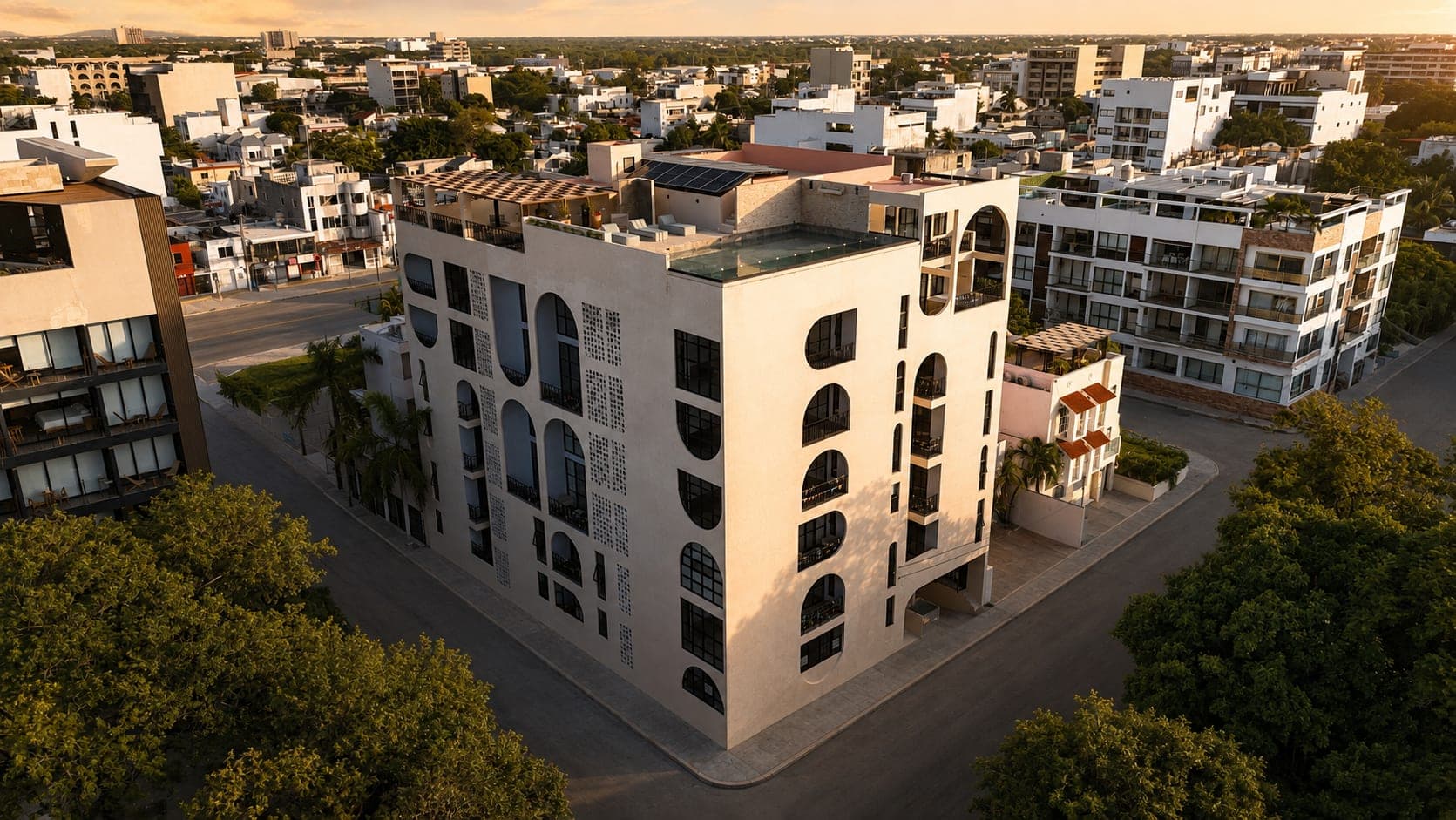
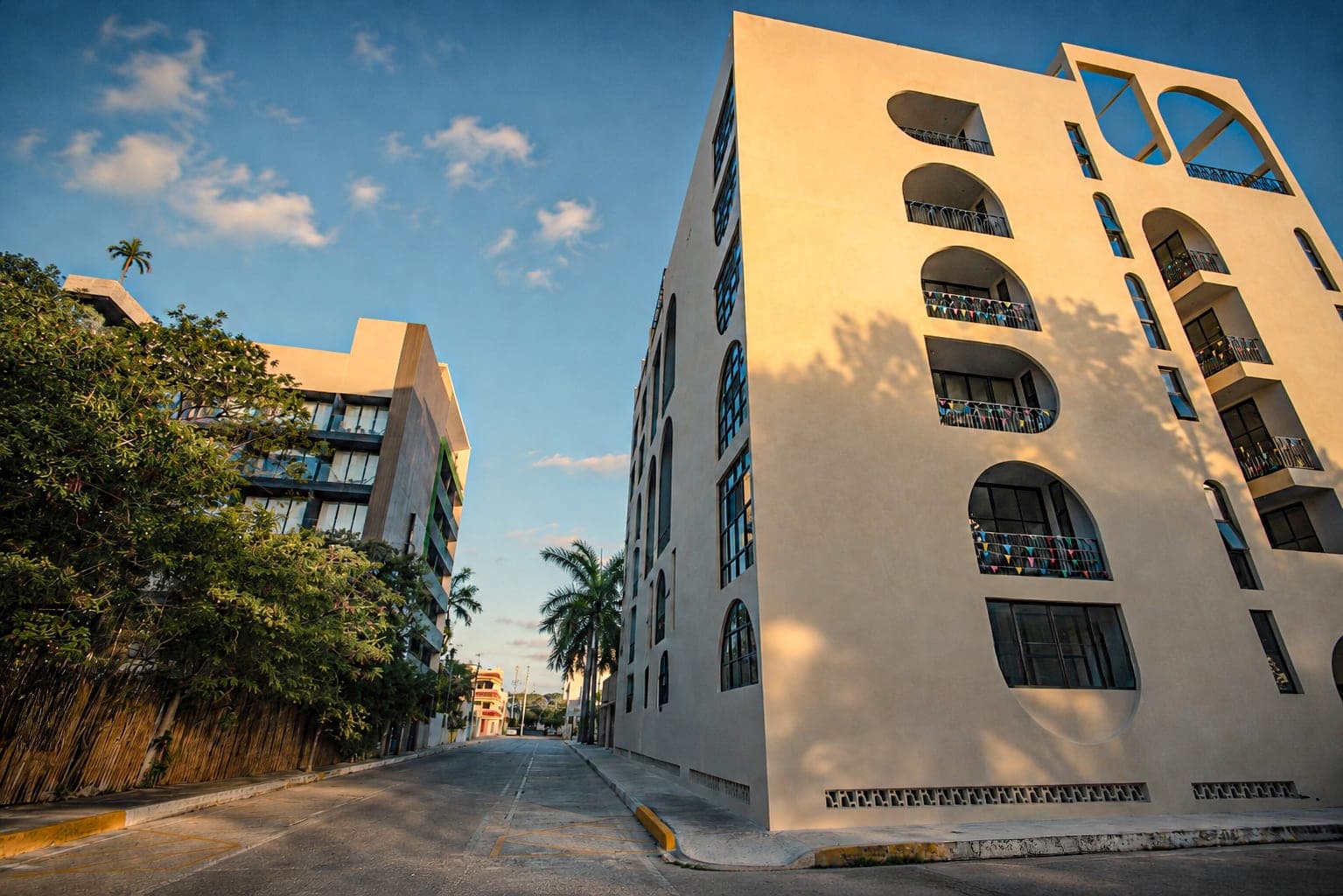
In Playa del Carmen, Marbella is a boutique tower of 35 Mediterranean residences on Avenida 25 Norte at Calle 24 Norte, in the Zona Dorada (Colonia Hollywood, within Gonzalo Guerrero), a central part of Playa del Carmen where daily life happens on foot: shops, restaurants, and services within reach, and the beach nearby. There are four layouts: Bígaro (one bedroom, one bath), Múrex (two bedrooms, two baths), Strómbus (a double-height loft, one bedroom, 1.5 baths), and Edúlis (the two-bedroom penthouse with double-height ceilings). The tower is finished and move-in ready, developed by Grupo VYT.
Current pricing on every unit, along with floor plans and availability, is published on the pricing and availability page and updated as the list moves. Tours can be scheduled by appointment via WhatsApp, any day of the week. And for the legal and tax side of buying in Mexico as a foreigner, this guide points you in a direction but doesn't replace a professional: bring in a notary and a tax advisor before you decide.
The differences, in one table
| Criterion | Playa del Carmen | Tulum | Source |
|---|---|---|---|
| From Cancún airport | ~55 km, 45 minutes to 1 hour | close to 2 hours | transfercancun-airport.com (2025); everythingplayadelcarmen.com (2025-2026) |
| Its airport in 2025 | CUN: 29,345,538 passengers (2025 close, down 3.5% from 2024) | TQO: ~1.23M (~22% of capacity) | ASUR (Jan 6, 2026); Travel And Tour World (2026) |
| Recent market cycle | steadier movement; ~$3,345 USD/m² for listed apartments, using TuLugar data | ~40% drop in purchases (AMPI); condos gave back 10-15% of earlier gains | TheLatinvestor (2025-2026; Playa prices updated Sep 8, 2026) |
| Condo time-on-market | no equivalent published figure | 90 to 140 days | TheLatinvestor (2025-2026) |
The same figures as the text, with the source on each row. Data as of September 2026, for information only; not investment advice.
Sources: everythingplayadelcarmen.com: Cancún airport transfer times (2025-2026) · transfercancun-airport.com: Cancún to Playa del Carmen distance (2025) · Travel And Tour World: Tulum airport capacity and 2025 passengers (2026) · The Cancun Sun: daily international arrivals at Tulum (2025) · TheLatinvestor: Tulum market correction, citing AMPI reports (2025-2026) · TheLatinvestor: How expensive is property in Playa del Carmen now? (page updated September 8, 2026). Benchmark of about USD 3,345/m² from TuLugar apartment data; comparison of Inmuebles24 and Propiedades.com listings: MXN 58,000 to 72,000/m² for new-build apartments and 48,000 to 56,000 for resales · HH analysis: Playa del Carmen new-construction benchmark across 7,109 priced units (July 2026) · ASUR: ASUR Announces Total Passenger Traffic for December 2025; Cancún airport closed 2025 at 29,345,538 passengers, down 3.5% from 2024 (January 6, 2026) · El Universal: Aeropuerto de Tulum pierde impulso al inicio de 2026, by Sara Cantera; 178,000 international passengers in Q1, down 34% from 2025 (May 25, 2026) · Escapada H: ¿Cuánto tiempo es de Tulum a Playa del Carmen si viajas en tu auto para conocer sus atractivos?; 65 km on Federal Highway 307, about 55 minutes, no tolls (September 5, 2024) · Yucatán Magazine: Tren Maya now connects Playa del Carmen, Tulum and Felipe Carrillo Puerto; first Playa del Carmen to Tulum train at 48 minutes (September 19, 2024) · Sipse: Tren Maya: ¿cómo llego a la estación de Playa del Carmen?; station at the junction with the highway to El Tintal, near km 6 (February 29, 2024) · Infobae: Tren Maya Cancún-Playa del Carmen: ¿cuánto cuesta el boleto y cuándo reanuda operaciones?; resumption announced for August 15 with four services a day, Tren Maya Conecta at 55 pesos (August 10, 2026) · Quintana Roo state government, Office of Communications: Tren Maya resumes the Cancún-Playa del Carmen route with four daily trips (August 15, 2026) · Mexico's Chamber of Deputies: Ley General de Bienes Nacionales (General Law of National Assets), Articles 7 and 8 (current text, last amended in the DOF on November 14, 2025) · Infobae: Cambian las tarifas para ingresar a las zonas turísticas de Tulum: cuándo entran en vigor y cuánto costarán; Parque del Jaguar at 100 pesos for foreigners and free for Mexicans from July 20, 2026 (July 18, 2026) · The Tulum Times: New 2026 Tulum ruins tickets and Parque del Jaguar fees explained for visitors (July 20, 2026) · Mexico's Tourism Ministry (Sectur), gob.mx: Sectur destaca la entrada gratuita a las playas de Tulum para viajeros y turistas nacionales e internacionales (July 17, 2026) · Publimetro: ¿Cuáles son los cambios con el plan 'Tulum Renace' y cómo benefician a turistas? (November 14, 2025) · Infobae: El Caribe mexicano enfrenta su peor temporada de sargazo: 90.000 toneladas flotan frente a Quintana Roo; Mexican Navy figures (August 2, 2026) · Reportur: QRoo: Gobierno admite la peor ocupación de la historia de Tulum; statements by Bernardo Cueto Riestra, Quintana Roo's tourism secretary (August 14, 2026) · Maya Ocean Research: Tulum vs Playa del Carmen Real Estate 2026; the brokerage's internal database, cutoff May 22, 2026 (published April 10, 2026, updated August 20, 2026)