
Is Playa del Carmen safe? What the official data says, and what you'll actually notice
Published July 14, 2026 · text last revised September 11, 2026
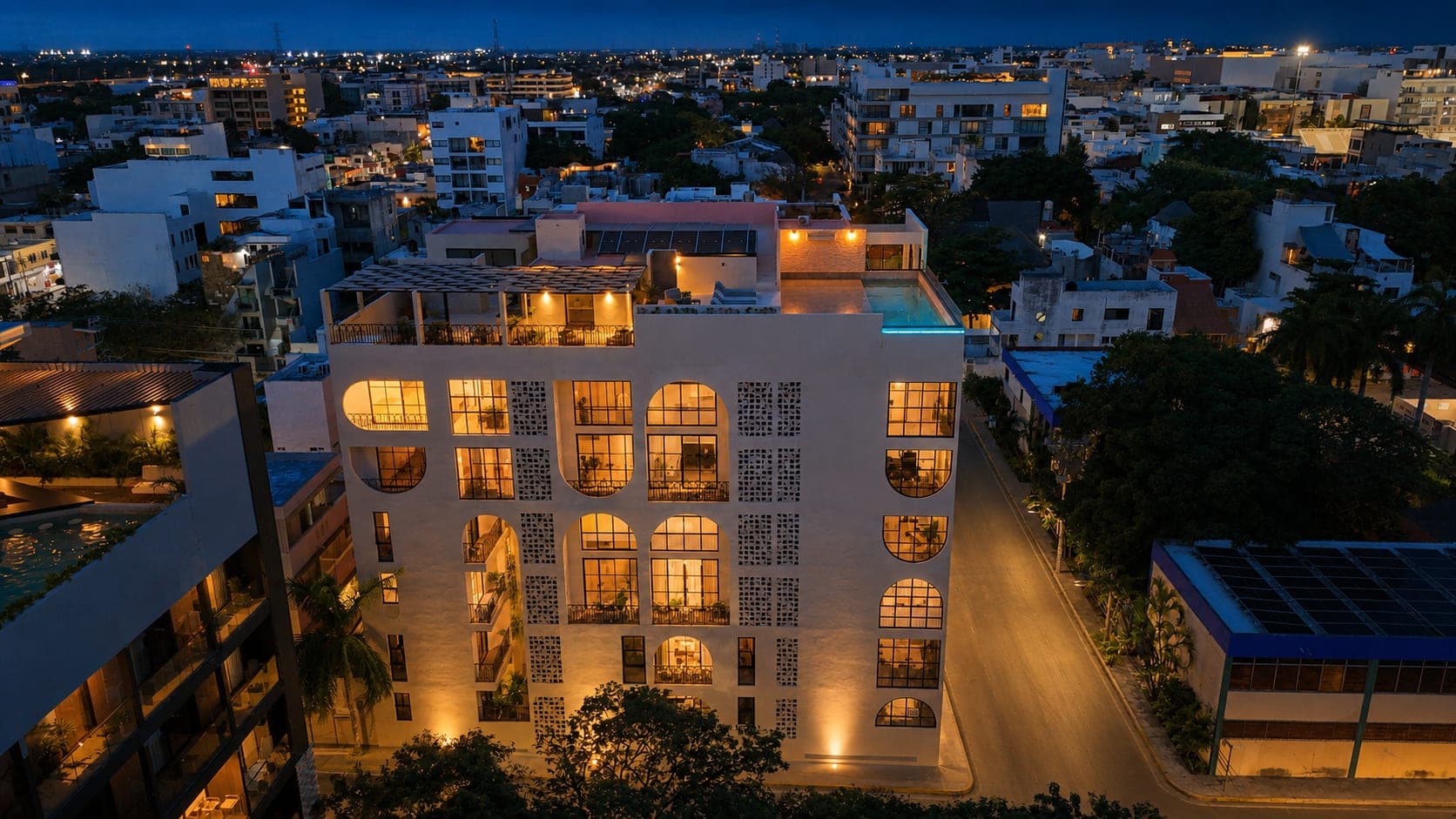
It's the first question almost every buyer from the U.S. and Canada asks us, and it's a fair one. This page doesn't dodge it and doesn't dramatize it either. It lays out what the U.S. and Canadian governments actually say, the most recent public figures, and what you'll really see walking through downtown and Gonzalo Guerrero, the neighborhood where Marbella stands. Then you decide, with dated information and sources you can check yourself. Figures from July to September 2026, for informational purposes only; this is not investment advice or a guarantee of returns.
What the official advisories actually say
The U.S. Department of State places Quintana Roo, the state that includes Playa del Carmen, Cancún and Tulum, at Level 2: "Exercise Increased Caution," per its update dated May 29, 2026. That's the same category the U.S. government assigns to France, Italy, Spain and the United Kingdom. There's no recommendation to reconsider or avoid travel to this area, unlike several states in northern Mexico.
The Government of Canada asks travelers to "exercise a high degree of caution" in Mexico overall, per its advisory updated September 11, 2026. Canada reserves its stronger wording, "avoid non-essential travel," for specific states, and Quintana Roo isn't one of them. The tourist zones of Playa del Carmen and the Riviera Maya don't appear on the list of areas to avoid.
The same Canadian advisory says two things worth reading together. Mexican authorities have worked to protect the major tourist destinations, and gang-related violence is lower there as a result. Violent crime still happens, though, in big cities, popular tourist areas and resorts.
In practice, the U.S. government treats this area roughly the way it treats much of Western Europe, and Canada asks for caution without telling anyone to cancel a trip. Neither one advises against coming to Quintana Roo. Advisories do change, so check your own government's official page before you travel; that's where the current status will always be.
The numbers, in context
Intentional homicides in Quintana Roo have been falling steadily: the daily average dropped 85% between September 2024 and June 2026, according to SESNSP figures presented on July 17, 2026, and June 2026 closed as the state's lowest month for homicides in twelve years, 57% below June 2025 (Mexico News Daily, July 2026). Nationally, 2025 points to a drop of close to 30% in homicides, according to preliminary official data reported by Mexico News Daily (2026).
59.9% fewer intentional homicides per day in Quintana Roo from January to August 2026, compared with the same months of 2025 (SESNSP)
The latest cut points the same way. At the close of August, Quintana Roo had the third-largest reduction in the country in its daily average of intentional homicides: 59.9% lower from January to August 2026 than in the same months of 2025. Only San Luis Potosí and Nayarit did better. SESNSP head Marcela Figueroa presented the figures at President Claudia Sheinbaum's morning press conference (Excélsior, September 8, 2026). These are statewide numbers, not Playa del Carmen's alone.
The number matters less than where it happens. Serious violence in Mexico is heavily concentrated among groups tied to organized crime, and it rarely reaches visitors. Even the State Department notes this in its advisories, and the Mexico Peace Index by Vision of Humanity documents the same concentration in its 2025 edition. A high statewide average almost never describes what's actually happening in a tourist corridor or a residential downtown neighborhood.
It helps to separate two things. The crime that can actually touch you as a resident or tourist tends to be minor: pickpocketing, ATM scams, inflated taxi fares, pushy timeshare sellers. It isn't dramatic, but it's real and worth anticipating. The high-profile violent crime that makes headlines runs on a different circuit, and daily life in Playa sits a long way from it.
Do the people who live here feel safe?
The official survey that measures this is INEGI's ENSU. Every quarter it asks adults in 91 Mexican cities whether they consider it unsafe to live in their city, and Playa del Carmen isn't in the sample. The closest city it does measure is Cancún: in June 2026, 70.1% said yes, compared with 74.9% in March. Across all 91 cities combined it was 59.8%, and in Mérida 38.2% (INEGI, report dated July 24, 2026).
Read that number with two caveats. It measures perception, not crime, and INEGI itself doesn't flag Cancún's change between March and June as statistically significant. It's also a different city. If you're weighing the two, our Cancún vs Playa del Carmen guide puts them side by side.
How the Marbella area feels
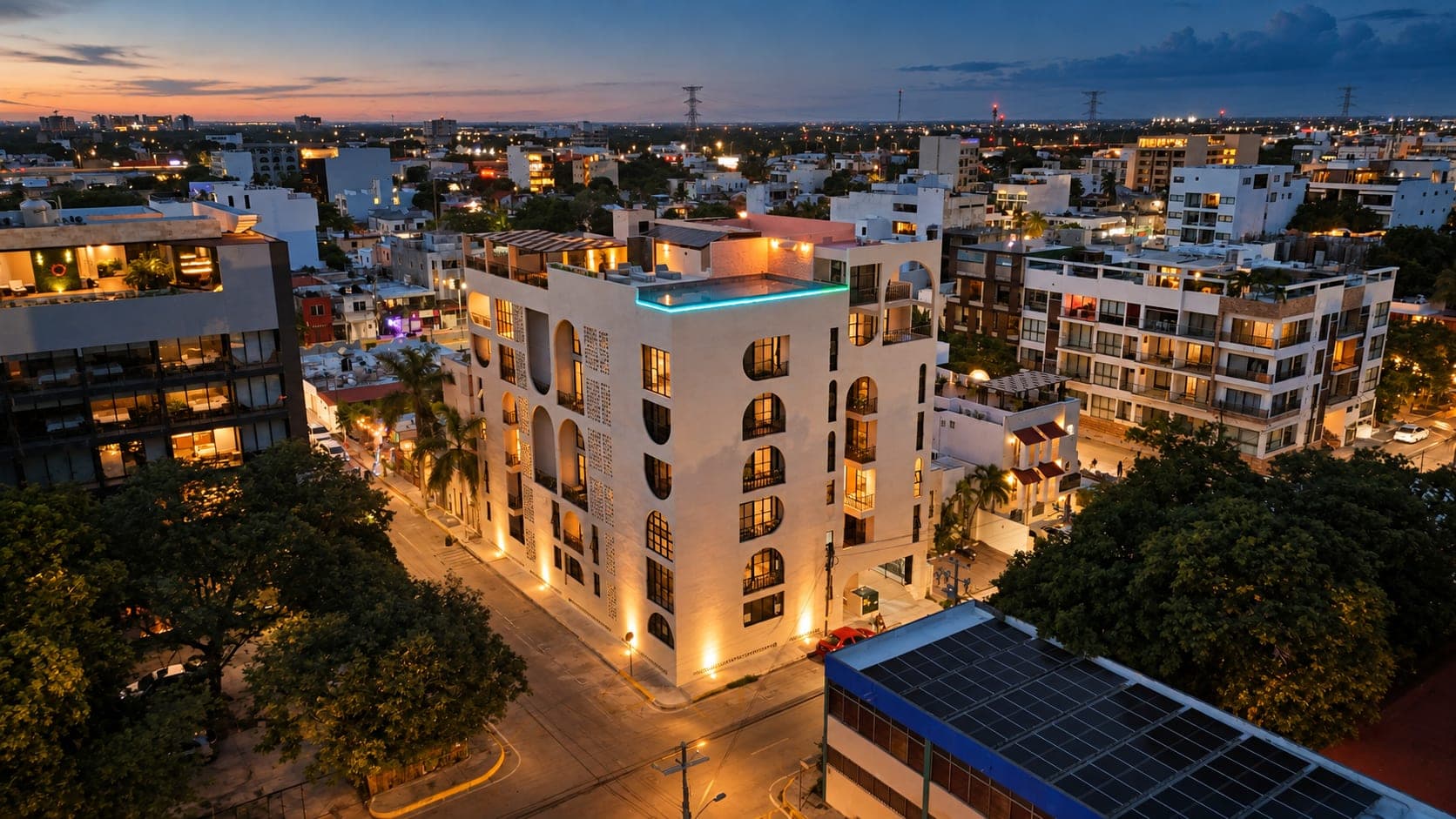
Marbella is in Colonia Gonzalo Guerrero, on Avenida 25 Norte at Calle 24 Norte, in the northern part of downtown, inside the Zona Dorada, a central part of Playa del Carmen where daily life runs on foot. Almost everything sits within walking distance, with cafés and restaurants all around. There's neighborhood life here year-round, and running into Canadian and American residents is common, something you notice on a first walk.
Quinta Avenida (Fifth Avenue), within walking distance, has tourist police with bilingual officers stationed specifically to help travelers: they give directions and are the first people to flag down if something goes sideways. Of everything said about safety here, that's the easiest thing to verify on foot. In 2026, travel outlets such as Travel Off Path and The Cancun Sun reported reinforced security and additional tourist police across Quintana Roo's destinations, Cancún and the Riviera Maya included.
None of this makes the area immune to anything, and we won't sell it that way. What it does mean is that walking through Gonzalo Guerrero and Quinta Avenida by day feels a lot like walking a busy European tourist neighborhood, with people around at almost any hour. The best test is still to come down, stay a few nights, and walk it yourself before deciding anything.
Practical tips for this area
At night, stick to well-lit, busy streets like Quinta Avenida and the main downtown blocks, and skip empty alleys and the dark beach. For longer trips, use an authorized taxi stand or a ride-hailing app rather than flagging cars on the street, and agree on the fare before you get in.
Withdraw cash from ATMs inside banks or malls rather than standalone machines on the sidewalk, and keep an eye on your card in bars and restaurants. If someone approaches offering a tour, a discount, or a timeshare "information session," you can simply say no and keep walking; that's the most common and most harmless thing you'll run into.
A couple of precautions from Canada's advisory that have nothing to do with crime and apply to anyone. Mexico's standards for balcony railing height are considerably lower than Canada's, so check them, especially if you're traveling with kids. In the water, riptides are common, beaches aren't always supervised and many have no warning flags. Where there is a flag, respect it.
If something happens: who to call
For any emergency in Mexico, dial 911, the same number as in the U.S. and Canada. Quintana Roo's state government also has a free app for visitors, Guest Assist, that places free calls to 911, 088 (National Guard), 089 (anonymous tips), 078 (roadside assistance) and the state tourism department's call center. It includes a directory of consulates and hospitals, plus guidance if you lose your passport. One catch: that call center only serves people who are inside Quintana Roo.
The U.S. and Canada both have consular offices in Playa del Carmen itself, so it's worth knowing where yours is before you need it. The U.S. Consular Agency is at Plaza Progreso, Local 33, on the Puerto Juárez-Chetumal federal highway. Per the U.S. Embassy, consular agencies provide emergency services to U.S. citizens. Canada's office is at Plaza Paraíso Caribe, on Avenida 10 Sur between Calle 3 and Calle 5 Sur, in Colonia Centro, and it covers the area from Playa del Carmen to Chetumal, Cozumel included.
Hurricane season: what to expect
On Mexico's Caribbean coast, hurricane season runs from early June to the end of November, per Canada's travel advisory. Mexico issues warnings through its Early Warning System for Tropical Cyclones, known as SIAT-CT: five colors, from blue (minimal danger) to red (maximum danger), used both while a storm approaches and while it moves away. The state's Guest Assist app carries hurricane information in six languages.
A recent example is Beryl, which made landfall just northeast of Tulum on July 5, 2024. At the time it was reported as a Category 2. The U.S. National Hurricane Center's final report, published in May 2025, puts it at Category 1 with 80-knot winds and says hurricane conditions likely reached parts of the coast between Tulum and Playa del Carmen, as well as parts of Cozumel.
If you're buying on this coast, in this building or any other, ask whether the condo carries insurance, what it covers and what you'd need to insure yourself, and what building management does when an alert goes up. Those are normal questions here, and you can ask them on your visit to Marbella.
Security inside Marbella
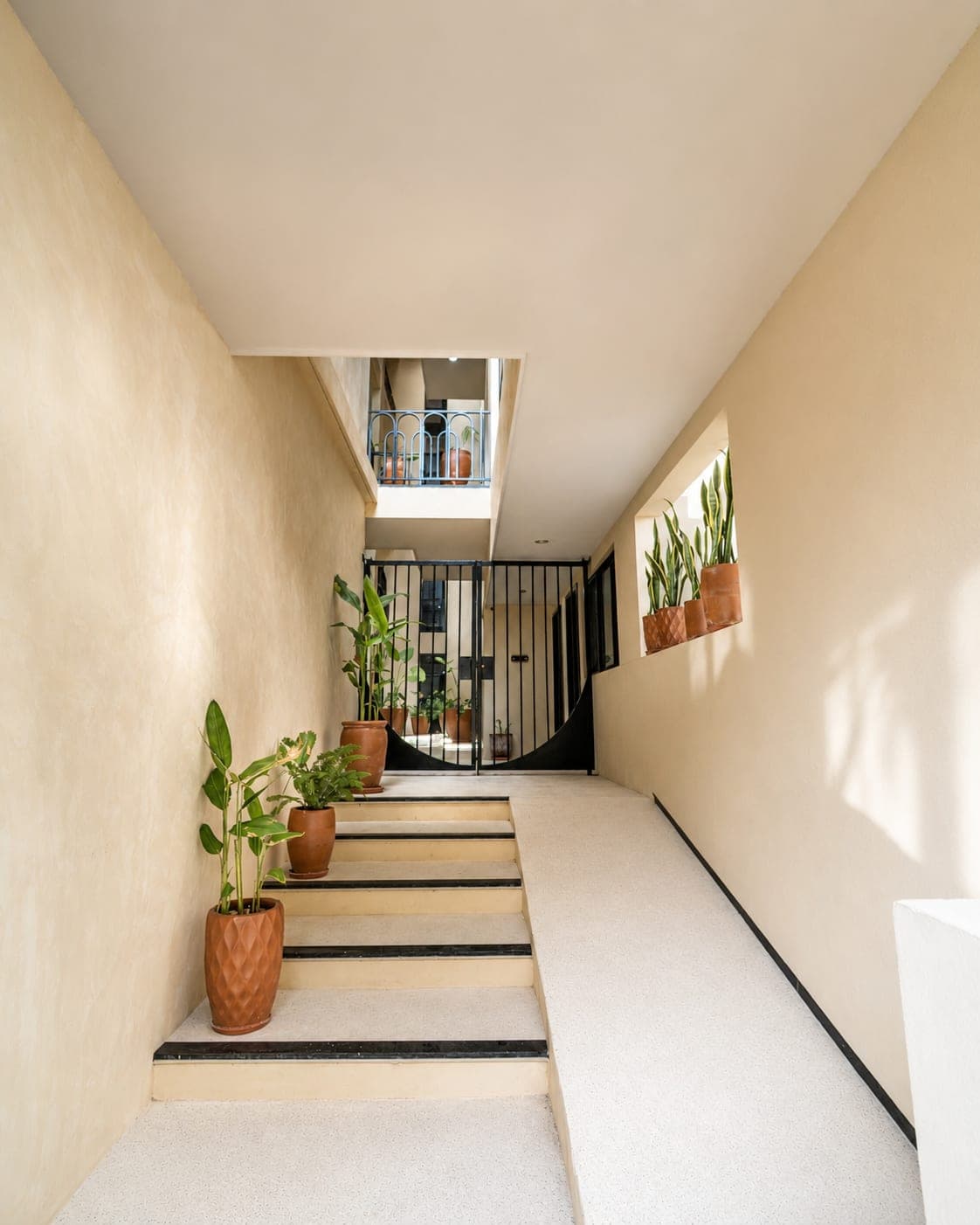
Inside, Marbella has 24-hour security and, separately, a reception desk with concierge service. Everything else in the tower is on the amenities page.
On your visit, ask what you'd ask at any condo: how visitors are checked in, and who takes your packages when you're away. They're day-to-day details, and it's better to know them before you sign.
Marbella is a 35-residence tower on Avenida 25 Norte, in Gonzalo Guerrero, and tours can be scheduled any day of the week, by appointment via WhatsApp. For the legal and tax side of a purchase, rely on a notary and your own advisor; we'll point you to the right people and make the introductions.
Sources: U.S. Department of State: Mexico Travel Advisory, Quintana Roo Level 2 "Exercise Increased Caution" (updated May 29, 2026) · Government of Canada: Travel advice and advisories for Mexico, "Exercise a high degree of caution" (updated September 11, 2026); also the source for balcony railings, beaches, hurricane season and the Playa del Carmen consular office · SESNSP (Mexico's national public security secretariat): intentional-homicide figures for Quintana Roo presented July 17, 2026, as reported by Mexico News Daily and Riviera Maya News (2026) · Mexico News Daily: "Mexico's homicide rate dropped 30% in 2025, preliminary data shows" (2026) · Vision of Humanity: Mexico Peace Index 2025 · Travel Off Path / The Cancun Sun: security deployment and tourist police across Cancún and the Riviera Maya (2026) · Excélsior: "Se ubica Quintana Roo como el tercer estado del país con más reducción de homicidios dolosos" (September 8, 2026), SESNSP figures for January to August 2026 · INEGI: Encuesta Nacional de Seguridad Pública Urbana (ENSU), second quarter of 2026, results report (July 24, 2026) · U.S. Embassy & Consulates in Mexico: U.S. Consular Agencies in Mexico, Playa del Carmen consular agency (accessed September 2026) · Government of the State of Quintana Roo: Guest Assist app listing on the App Store (version 3.6, accessed September 2026) · La Jornada Maya: "Sedetur desarrolla herramientas digitales para turistas en Quintana Roo" (December 8, 2024) · Secretaría de Gobernación: "Conoce el Manual del Sistema de Alerta Temprana para ciclones tropicales (SIAT-CT)" (gob.mx, May 24, 2018) · National Hurricane Center (NOAA): Tropical Cyclone Report, Hurricane Beryl (AL022024) (May 1, 2025)